SEC 520: Instructional Design, Technology, and Leadership • Watson College of Education, UNCW
Module ONE:
Decision-making Principles
Reading: Chapters 1, 2, 11
Videos: 9 Required
Assignment: Classroom Design/Management (100 pts)
Discussion: VoiceThread (50 pts)
Module ONE Progress
0%
Module ONE: At a Glance
This checklist covers everything in the module. You can read the material in any order and retrace your steps for clarification. Everything on this list prepares you for Module TWO.
Read: Chapter 1: Frames of Reference for Teaching. Chapter One includes figures and tables on decision-making and the four contexts of schooling. These are worth your time. You can either read the chapter before starting the module, or you can read along as you follow the module’s sequencing.
Read: Chapter 2: The Big Picture in Your Classroom. As you read, focus on the Holistic Instructional Cycle (Figure 2.1), the developmental perspective (Piaget, Vygotsky), and the behavioral, cognitive, and constructivist models. You can either read the chapter before starting the module, or you can read along as you follow the module’s sequencing.
Read: Chapter 11: Managing the Classroom. The big ideas in this chapter are: the management models (Maslow, Kohlberg, Reality Therapy, Assertive Discipline, Behavior Modification), TESA, and the section on routines and rules. You can either read the chapter before starting the module, or you can read along as you follow the module’s sequencing.
Watch: There are several videos listed in the Videos tab. Some of them are video walkthroughs of the material. Others are meant for enrichment, another take on the big ideas from the course objectives.
The interactive activities are based on the instructional theories you are currently learning. Each one teaches a concept from the chapters through application and practice.
Assignment Submission: Case Analysis with Competing Models (100 pts). In this assignment, there three scenarios with two models each. Each one has directions for your response.
Assignment Submission: Design Audit: Floor Plan Critique (100 pts). In this assignment, you will identify five design problems and propose fixes for them. After that, you will redesign the classroom to address the problems.
Assignment Submission: Classroom Design/Management (100 pts). In this assignment, you will In this assignment, you will develop a teaching philosophy grounded in the theory from Chapter 2. You will also create a classroom management plan that connects to one of the models presented in Chapter 11
Assignment Submission: VoiceThread Discussion #1 (50 pts). The discussion prompt is in Canvas. Then read through your classmates' posts and reply to at least two of them
📹
Chapter Walkthroughs Available
The Videos tab has a Chapter 1 and Chapter 2 walkthrough, plus videos on classroom management and the teacher-student relationship.
Part 1
Module Overview
"Education is not preparation for life; education is life itself."
John Dewey
What kind of teacher you are becoming shapes every decision you make in a classroom, from how you arrange the desks to how you respond when a student shuts down. You settle that before you write a lesson plan, pick a strategy, or design an assessment.
Chapter 1 asks you to examine your frames of reference: the beliefs, experiences, and assumptions you carry into the profession. It also introduces the external forces that constrain and shape what teachers do, from standards and accountability to the social contexts of schooling. Chapter 2 zooms out to the big picture of instruction: the holistic cycle that connects planning, teaching, and assessment, and the developmental and learning theories (Piaget, Vygotsky, behaviorism, cognitivism, constructivism). Chapter 11 brings you into the classroom itself, where management is a system of relationships, routines, expectations, and responses.
Your frames of reference (Ch. 1) determine how you interpret student behavior. Your understanding of learning theory (Ch. 2) shapes how to plan instruction. Your management approach (Ch. 11) creates the conditions for instruction. In this module, you will work through all of these connections, both in the readings and through the interactive activities.
Core ConceptFrames of Reference
Your beliefs about students, learning, and the purpose of school drive your decisions before you even realize you are making them. Chapter 1 asks you to name those beliefs so you can take a closer look at them.
Theoretical FoundationThe Big Picture
Piaget, Vygotsky, behaviorism, cognitivism, and constructivism each offer a different lens for understanding why students learn.
Practical SkillClassroom Management
A strong management system makes good instruction possible. When your classroom runs well, your lesson plans have a better chance to be effective.
Professional IdentityTeaching as Decision Making
Teaching involves hundreds of decisions every day, often under pressure and with incomplete information. This module gives you frameworks for making effective decisions.
How This Page Works
All the learning materials for this module are on a single page, organized into the eight tabs at the top. You can work through the pages in order, which follows the logic of the chapters, or jump to the section you need. Click any card below to go to the tab.
Overview
On this tab you will find the readings, assignment descriptions, rubrics, bonus resources, and the reflection exit ticket.
Frames of Reference
Chapter 1 covers the four contexts of schooling (social, emotional, educational, and collegial), levels of Invitational Education, the differences between strategies, methods, and techniques, professionalism, motivation, and interactive sort activities.
Big Picture
Chapter 2 covers the holistic instructional cycle, Piaget and Vygotsky, behaviorism and constructivism, the spectrum of instructional control, and active learning.
Management
Chapter 11 covers Maslow, Kohlberg, Reality Therapy, Assertive Discipline, Behavior Modification, TESA, rules and routines, withitness, and strategies for the first week of the school year.
Management Plans
You will explore CHAMPS, build a management plan from your philosophy, and connect theory to daily practice. This section prepares you for Part 3 of the assignment.
Classroom Design
Physical classroom layout, traffic patterns, seating arrangements, and how the room you build reflects the instruction you plan to deliver. This section prepares you for Part 2 of the assignment.
Apply It: Scenarios
Branching scenarios drawn from all three chapters. Each one drops you into a classroom where something has gone sideways, and your choices determine what happens next.
Video Library
This section includes nine required videos: instructor walkthroughs for Chapters 1, 2, and 11, along with Dalton Sherman, Rita Pierson, CHAMPS, teacher leadership, and motivation research.
Part 2
Guiding Questions
Keep these in mind as you work through the chapters and activities.
1 What assumptions about students do you carry into the profession, and where did those assumptions come from? How do your personal experiences as a student shape your beliefs about what good teaching looks like?
2 How does the way students develop (Piaget) change what and how you should teach at different grade levels? What happens when instruction ignores developmental readiness?
3 Is classroom management about control or about relationships? Can it be both? Where is the line between structure and rigidity?
4 When you think about the teachers who made a difference in your life, which management style did they use? Could you name it now?
Part 3
Module ONE
Learning Objectives
By the end of this module, you will:
🔎
Identify and examine your own frames of reference for teaching, including the beliefs, experiences, and assumptions that shape instructional decisions. InTASC #9
🏫
Describe the four contexts of schooling (Social, Emotional, Educational, Collegial) and explain how each context shapes the classroom environment. InTASC #9InTASC #10
🔄
Explain the Holistic Instructional Cycle (Figure 2.1) and the relationship among planning, instruction, and assessment. InTASC #7
🔬
Compare developmental (Piaget, Vygotsky), behavioral, cognitive, and constructivist perspectives on learning and identify when each applies. InTASC #1InTASC #2
📍
Locate your own teaching philosophy on the Spectrum of Instructional Control, from direct instruction to student-initiated learning. InTASC #8
📊
Analyze classroom management models (Maslow, Kohlberg, Reality Therapy, Assertive Discipline, Behavior Modification) and select strategies appropriate to specific contexts. InTASC #3
📑
Design a classroom floor plan that reflects your instructional philosophy and supports your management approach. InTASC #3InTASC #7
📝
Develop a management plan grounded in a stated philosophy, with specific routines, rules, expectations, and responses to misbehavior. InTASC #3InTASC #9
Part 4
Required Readings
Each tab corresponds to a chapter. The reading gives you the context for the activities. The annotation below each reading tells you what to focus on and why it matters for your assignments.
📖
Chapter 1: Frames of Reference for TeachingOrlich et al.
Read for: Chapter 1 asks what it means to be a teacher in the current moment, with all the political, social, and economic pressures that come with the profession. Focus on the four contexts of schooling (Social, Emotional, Educational, Collegial) and the Invitational Education model's four levels of teacher functioning (Intentionally Disinviting through Intentionally Inviting). The section on motivation (intrinsic vs. extrinsic) connects directly to Chapter 11's management models. The "How to Be an Active Educator" list (six points) is a practical framework you will return to throughout the semester. Read the NBPTS core propositions and the NEA Code of Ethics: these define what the profession expects from you.
🎓
Chapter 2: The Big Picture in Your ClassroomOrlich et al.
Read for: Figure 2.1 (the Holistic Instructional Cycle) shows how planning, instruction, and assessment connect in a loop around the learner. You will see that model in every module after this one. Piaget's four stages (Table 2.1 with age percentages) and Vygotsky's Zone of Proximal Development explain why the same lesson plan can succeed in one classroom and fail in the one next door. The behavioral perspective (direct instruction, Instructional Theory Into Practice) gives you one end of the Spectrum of Instructional Control. Constructivism gives you the other. Table 2.2 (Student-Initiated vs. Direct) shows you the full range. Know where you fall on that spectrum before you write Part 1 of your assignment.
📋
Chapter 11: Managing the ClassroomOrlich et al.
Read for: This is the longest chapter in the module and the one most directly connected to your assignment. Section 1 covers the three variables of classroom management (norms, awareness, communication) and Figure 11.1's triangle model. Section 3 walks through management models: Maslow's hierarchy, Kohlberg's moral reasoning, Glasser's Reality Therapy, Canter's Assertive Discipline, and Behavior Modification with its four phases. Know what each model assumes about student behavior and what strategies each one recommends. Section 4 covers the daily mechanics: rules, routines, record-keeping, and Table 11.5 (Sources of Problems). Section 5 is about environment: the good start, effective directions, monitoring, withitness, and handling interruptions. The TESA program (Section 2) gives you a framework for equitable interactions across gender and race. All of this feeds Part 3 of your assignment.
Key Theorists
For reference: These are the figures behind the ideas in Chapters 1, 2, and 11.
JP
Jean Piaget
1896–1980
Piaget proposed stages of cognitive development, arguing children construct knowledge through interaction with their environment.
flip back
Jean Piaget
click
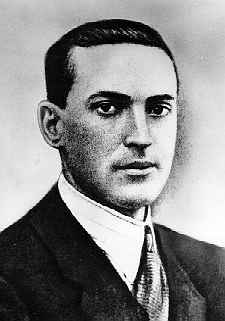
LV
Lev Vygotsky
1896–1934
Vygotsky's Zone of Proximal Development frames learning as a social process. What a student can do with help today, they can do alone tomorrow.
flip back
Lev Vygotsky
click
BS
B. F. Skinner
1904–1990
Operant conditioning proposes behavior is shaped by what follows it. Reinforcement strengthens a behavior, and punishment weakens it.
flip back
B. F. Skinner
click
AB
Albert Bandura
1925–2021
Bandura's social learning theory and self-efficacy suggest students learn by observing models. A student's belief in their own ability drives their effort.
flip back
Albert Bandura
click
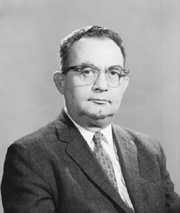
AM
Abraham Maslow
1908–1970
Maslow's hierarchy of needs holds basic needs like safety and belonging must be met before students can engage with higher learning.
flip back
Abraham Maslow
click
LK
Lawrence Kohlberg
1927–1987
Kohlberg's stages of moral development describe how children reason about right and wrong, and how those reasoning patterns shift with age and experience.
flip back
Lawrence Kohlberg
click
WG
William Glasser
1925–2013
Glasser's Reality Therapy and Choice Theory frame behavior as a choice. Classrooms work when students see the connection between their actions and the consequences.
flip back
William Glasser
click
LC
Lee Canter
1942–
Canter's Assertive Discipline model is built on clear rules, consistent consequences, and firm but respectful teacher authority.
flip back
Lee Canter
click
JK
Jacob Kounin
1912–1995
Kounin's concept of withitness treats effective management as preventive. The teacher sees everything and heads off trouble before it spreads.
flip back
Jacob Kounin
click
Part 5
Assignments
✍️
Assignment 1: Case Analysis with Competing Models
Three classroom scenarios are described below. Each one involves a student behavior problem where at least two Chapter 11 management models would suggest different responses. For each scenario, you will analyze the situation through the lens of two competing models and argue for the approach you would take.
Scenario A: The Shutdown Brad is a seventh-grader in your first-period social studies class. He was engaged during the opening activity but shut down when you transitioned to independent reading. He has his head on his desk, earbuds in, hood up. When you approach his desk and quietly ask if he needs help, he says, "I'm good." He has not opened his book. Two students nearby are watching to see what you do.
Scenario B: The Power Struggle During a ninth-grade biology lab, Emily refuses to wear safety goggles. "They fog up and I can't see," she says. You explain the safety rule. She says, "Then I'm not doing the lab." Three of her lab partners are standing idle, waiting. The rest of the class is watching. You have 22 minutes left in the period, and this lab cannot be made up.
Scenario C: The Ripple You teach fourth grade. During a read-aloud, Noah starts tapping his pencil on his desk. You use proximity and stand near him. He stops. Thirty seconds later, two students on the other side of the room start tapping their pencils. You make eye contact. They stop. Ten seconds later, Noah starts again, and this time he adds a rhythm. Three students join in. The read-aloud is dead.
For each scenario (three total), write 400 to 600 words that include:
1. Two-Model Analysis. Choose two management models from Chapter 11 (Maslow's Hierarchy, Kohlberg's Moral Reasoning, Glasser's Reality Therapy, Canter's Assertive Discipline, or Behavior Modification). Explain what each model would say is happening and what response each would recommend. Name the level, stage, strategy, or technique from each model.
2. Your Argument. State which model (or which combination) you would follow and why. Your argument must reference the specific details of the scenario.
3. What You Risk. Identify one thing that could go wrong with your chosen approach. What does the model you chose fail to account for in this situation?
Submit your work as a single document with clear headings for each scenario. The total length is between 1,200 and 1,800 words across all three analyses.
Both models correctly identified for each scenario. The specific level, stage, or technique from each model is named and applied to scenario details.
Both models identified. Application correct but lacks specificity in at least one scenario. 22
Models missing, confused, or applied without connection to the scenario. 12
Argument & Reasoning
30
Argument references specific scenario details (student behavior, context, stakes). Reasoning explains why this model fits this student in this moment.
Argument is clear and references the scenario but stays general in places. 22
No clear argument, or argument contradicts the model described. 12
Risk Analysis
20
For each scenario, a specific, plausible risk is identified. The risk demonstrates understanding of the model's limitations.
Risks identified but vague or generic in at least one scenario. 14
No risk analysis, or risks are trivial. 7
Use of Chapter 11 Content
20
All three analyses reference specific sections, figures, or tables from Chapter 11. Demonstrates close reading.
References to Chapter 11 present but not specific. 14
No meaningful reference to Chapter 11 content. 7
100
Total Points Case Analysis with Competing Models
✍️
Assignment 2: Design Audit, Floor Plan Critique
You are given a classroom floor plan for Ms. Taylor's 8th-grade English class (Room 204). The floor plan contains five deliberate design problems based on principles from Chapter 11's sections on classroom environment, physical arrangement, and management systems.
First, identify all five problems and describe each one in specific terms.
Second, cite the relevant Chapter 11 section for each problem. Name the principle, concept, or recommendation the design violates.
Third, propose a fix for each problem. Describe a specific change that solves the problem without creating a new one.
Fourth, redesign the floor plan for Room 204 so it corrects all five issues. Include a one-paragraph rationale (150 to 200 words) explaining how the new design supports Ms. Taylor's instruction.
Submit your work as a single document. The written portion is between 800 and 1,200 words, not counting the floor plan itself.
All five problems correctly identified with specific, detailed descriptions. Names what is wrong and why it matters for teaching and learning.
Four or five problems identified. At least one description lacks specificity. 18
Fewer than three problems identified, or descriptions do not match actual problems in the floor plan. 10
Chapter 11 Citations
25
Each problem connected to a specific Chapter 11 section, principle, figure, or concept. Citations accurate and demonstrate close reading.
Most problems cite Chapter 11, but at least one citation is vague or missing a section reference. 18
Few or no citations, or citations are inaccurate. 10
Proposed Fixes
25
Each fix is specific, practical, and addresses the identified problem. Does not create a new problem. Connection to cited principle is clear.
Most fixes practical. One or two are vague or do not connect to the cited principle. 18
Fixes missing, impractical, or do not address the identified problems. 10
Revised Floor Plan
25
Revised plan detailed enough to recreate the room. All five problems corrected. Rationale connects design to Chapter 11 principles and Ms. Taylor's instructional needs.
Revised plan addresses most problems. Rationale present but thin. 18
No revised plan, or plan does not address the identified problems. 10
100
Total Points Design Audit: Floor Plan Critique
✍️
Assignment 3: Classroom Design/Management
This assignment asks you to connect who you are as a teacher (philosophy) to how you run a classroom (management plan). The two parts build on each other. If your philosophy values student-centered learning but your management plan relies on strict consequences, you have a contradiction to resolve. The assignment is designed so those contradictions become visible.
Part 1: Teaching Philosophy (50 pts). Write a teaching philosophy that addresses your beliefs about how students learn, what role the teacher plays, how the classroom should be structured, and how you will handle misbehavior. Ground your philosophy in at least two of the theories from Chapter 2 (Piaget, Vygotsky, behaviorism, cognitivism, constructivism) and connect it to your own experience as a student or observer. State it in your own words and support it with the course readings.
Part 2: Management Plan (50 pts). Write a management plan that includes: your three to five classroom rules (with the rationale for each), your routine for the first 10 minutes of class, your procedure for transitions, your response to minor misbehavior, your response to major misbehavior, and your strategy for building positive relationships with students. Connect at least one management model from Chapter 11 (Maslow, Kohlberg, Glasser, Canter, or Behavior Modification) to your plan and explain how that model informs your approach.
Philosophy addresses beliefs about how students learn, teacher role, and classroom structure. Each belief stated in own words with specificity.
Addresses most areas. One area underdeveloped or vague. 11
Missing, does not address learning beliefs, or consists of unsupported claims. 6
Theory Connections
20
At least two Chapter 2 theories named and applied to own beliefs. Connection explains how theory shapes a specific element of the philosophy, with text reference.
Two theories named. At least one connection surface-level or without text reference. 14
One theory named, or theories listed without connection to beliefs. 7
Personal Experience
15
Connects to specific personal experience as student or observer. Experience described in enough detail to show how it shaped a stated belief.
Experience mentioned but connection to a belief is underdeveloped. 11
No personal experience, or experience unrelated to stated beliefs. 6
Rules & Rationales
10
Three to five rules stated. Each has a rationale connecting to the philosophy or a Chapter 11 principle.
Rules present. At least one rationale missing or disconnected from philosophy. 7
Rules missing or listed without any rationale. 4
Routines & Procedures
10
Includes specific opening routine (first 10 minutes), transition procedure, and enough detail for another teacher to follow.
Opening routine and transition present but one lacks specificity. 7
No routines or procedures described. 4
Misbehavior Response
10
Describes responses to both minor and major misbehavior. Responses distinct and consistent with stated philosophy.
Both levels present. One is vague or inconsistent with philosophy. 7
Only one level of response, or responses contradict philosophy. 4
Management Model Connection
10
At least one Chapter 11 model named and connected to a specific plan element. Connection explains how model informs approach, with text reference.
Model named. Connection present but thin or without text reference. 7
No management model, or model misidentified. 4
Relationship-Building Strategy
10
Includes at least one specific strategy for building positive relationships. Strategy is concrete and actionable.
Strategy described but lacks specificity. 7
No relationship-building strategy. 4
100
Total Points Classroom Design/Management
💬
VoiceThread Discussion #1
Respond to the VoiceThread prompt with a recorded video or audio response (2 to 3 minutes). Then reply to at least two peers with substantive comments that extend, question, or connect to their ideas. ("Great point!" does not count as a substantive reply.) A substantive reply adds something: a different perspective, a follow-up question, a connection to the reading, or a concrete example from your own experience.
Discussion Prompt
Think about a teacher who made a lasting impact on you, positive or negative. Describe a specific moment in that teacher's classroom. Using concepts from Chapters 1, 2, or 11, analyze what made that moment effective (or what went wrong). What frame of reference, instructional approach, or management decision was at work? How does that moment shape the kind of teacher you want to become?
Your initial post is worth 30 points. It needs to be clear, specific, and grounded in the module content, with at least one reference to a concept from the readings.
Each of your two peer replies is worth 10 points. Each reply engages with your peer's idea and add something to the conversation.
Before you move on, keep in mind this module has three assignments and they build on each other. The Case Analysis asks you to apply Chapter 11 models to classroom scenarios. The Design Audit asks you to read a floor plan the way a teacher would, spotting problems, citing principles, and proposing fixes. The Classroom Design and Management assignment asks you to write your own teaching philosophy and management plan. By the time you reach the third assignment, you should be able to connect your beliefs about teaching to the specific routines, rules, and room arrangements you would use. Your philosophy and your management plan will reflect each other.
Module Reflection: Exit Ticket
After you have completed all the readings, activities, and assignments for this module, respond to the prompt below. Submit your response in the Exit Ticket: Module 1 assignment in Canvas (25 points).
Name one belief about teaching that you held before this module and that has changed, sharpened, or been confirmed by the readings. What specific concept from Chapter 1, 2, or 11 caused that shift? If nothing changed, explain why your existing belief held up against what the chapters presented.
If you can answer that question with specifics, you are doing the reflective work this module asks of you. If the answer feels vague, go back to the tab that covers the concept you are unsure about and work through the activity again.
Chapter 1: Who you are before you enter the classroom
The schools of America are its single largest social service institution. As members of this profession, teachers need a broad understanding of instruction. You need to know how your teaching fits into a social context, and you need a frame of reference connecting theory to practice in the classroom.
Chapter 1 argues every teacher carries a set of beliefs about students, learning, and the purpose of school. Most of those beliefs formed before you ever took an education course. They come from your own experience as a student, from teachers who helped you and ones who did not, from your family, your community, and your culture. The chapter calls these your "frames of reference." Once you identify them, you can make deliberate instructional decisions.
Section 1
A Snapshot of Schooling and the Profession
Section 1-1 opens with a fundamental question: what is the purpose of public education? The textbook answers by citing the American Dream. Public schools exist to provide students with the knowledge, skills, and competencies they need to succeed. For millions of people, public schools have provided the opportunities to realize their own version of the American Dream. Not all individuals in our society benefit equally from public education, and the reasons range from socioeconomic factors to language diversity. The best we can expect from schools is equal access to opportunity for every student. Every educator has an ethical and moral obligation to work toward that for all students.
Section 1-2: Instruction as a Systematic Process
An instructional model is a broad, overarching descriptor composed of several different concepts. Think of the solar system: a model with the sun at the center and all planets arranged around it. You can see this picture in your mind's eye. Instruction works the same way. There are learning psychology models (behavioral, cognitive, constructivist, developmental). There are organizational models (large groups, small groups, cooperative learning, individualized instruction). There are classroom management models (Chapters 5 and 11). A wide spectrum of instructional models will provide you with an entry-level set of skills that are trustworthy, research-based, and that help bridge the gap between your preservice education and your first classroom.
Section 2
Strategies, Methods, and Techniques
Section 1-3 draws a distinction that matters throughout this course. Embedded within any model is a set of accompanying procedures for a specific aspect of that model. The textbook uses three terms to describe these procedures, and each term means something specific:
Level 1Strategies
The broadest term. A strategy is an overall approach to instruction, such as cooperative learning or direct instruction. Strategies are driven by your philosophical orientation and the goals of the lesson. Chapter 9 is devoted entirely to a model of questioning. By the way, in this text the term "strategy" is used broadly. For example, Chapter 9 is devoted entirely to a strategy for questioning.
Level 2Methods
Methods are more specific than strategies. A method is a particular way of carrying out a strategy. If cooperative learning is your strategy, jigsaw, think-pair-share, and numbered heads together are methods within that strategy. Methods have steps and structures.
Level 3Techniques
A technique is the most specific term. It describes a particular action or behavior a teacher uses within a method. Wait time after asking a question, cold-calling a specific student, and using proximity to redirect a student are all techniques. They are the individual moves a teacher makes in the moment.
• Activity: Strategy, Method, or Technique?
Each item below is either a strategy, a method, or a technique. Drag each one to the correct category. Notice the scope differences: strategies are broad approaches, methods are structured procedures within a strategy, techniques are specific teacher moves.
Items
Drop Here
Section 3
External Influences on Instruction
Section 1-4 identifies three major external forces shaping what happens in classrooms. You will be affected by testing mandates, the requirement to use certain national standards, and specific teaching methods for students with disabilities. These external forces influence your daily instructional decisions.
Public education is funded with public money, and those funds are raised and allocated through a political process. Local school boards and state legislatures are the forums where communities assign priorities and establish rank order. As a teacher, part of your role is informing parents, school supporters, and community members.
Business groups have long influenced public schools. The most visible are publishers of textbooks and materials, along with suppliers who sell tests and assessments. Their role has expanded over time to include a stronger influence on policy. For example, some businesses promoted higher academic standards and endorsed high-stakes testing and accountability measures in public schools while having a hand in making profits from it.
A large number of different advocacy groups have a direct effect on instruction. The National Science Teachers Association, the Council for Exceptional Children (CEC), which promotes programs for children who have any learning disability: these groups shaped landmark legislation. In 1975, PL 94-142, the Education for All Handicapped Children Act, was followed by the Individuals With Disabilities Education Act (IDEA, 1990) and the Americans with Disabilities Act (ADA, 1990). Within all the laws and accompanying regulations are prescriptions for schools and teachers. You will be given specific guidelines to follow during your first teaching job, especially those regarding making accommodations for children who have an Individualized Education Plan (IEP).
Section 4
Key Contexts of Schooling
Section 1-5 identifies four contexts shaping how people experience schools: the relationships, the emotional climate, the teaching practices, and the professional culture. All four contexts need to work together. A warm, welcoming school also needs strong instructional practices. A school with high academic standards also needs an emotional climate where students feel safe taking risks.
Context 1Social
The social context draws on social capital, which is the network of trust, norms, and cooperation connecting families, communities, and institutions. This includes personal relationships, public institutions, churches, clubs, and ethnic connections. As a teacher, you build social capital for your students when you know them personally, expose them to new experiences, and help them access everything the school has to offer.
Context 2Emotional
The emotional context is about caring: whether students feel known, valued, and safe. Quality of caring adds a human element to the impersonal institution. The close interactions among teachers and students forge bonds of trust and mutual support, especially for children who have trouble meeting expectations for achievement (Noddings, 2005). Additionally, caring is part of the social capital of the school organization, and it makes it easier to help students of all ages develop moral and ethical values.
Context 3Educational
The educational context describes the quality of teaching and learning, including the rigor of the curriculum, the skill of instruction, and whether the school holds high expectations for all students. This context intersects with social pluralism, the reality that our society and our schools are composed of many different types of people. This mixture of nationalities, races, classes, religions, occupations, philosophies, value systems, and economic beliefs shapes every classroom.
Context 4Collegial / Professional
The collegial context is about how teachers relate to each other and to the profession. Schools that encourage continued studies, professional staff development, and collaboration among teachers tend to develop their own independent school culture. When this culture includes healthy values, innovative teaching styles, and respectful communication, it strengthens the entire building. When it includes less desirable qualities that undermine the profession, it weakens everyone.
Social Capital: Seven Sources The textbook's Key Ideas box lists seven sources of social capital: (1) Families, (2) Personal relationships, (3) Public institutions, (4) Churches, (5) Communities, (6) Clubs, (7) Ethnic relationships. These are the networks that give students resources beyond the classroom. Some students arrive with abundant social capital. Others arrive with almost none.
• Activity: Context Sort
Each statement below describes something happening at a school. Drag each statement to the context it belongs to: Social, Emotional, Educational, or Collegial.
Statements
Drop Here
Theory Link
Five Layers of Influence (Bronfenbrenner )
The textbook's four contexts of schooling describe school-level forces on a student. Bronfenbrenner's ecological systems theory goes further. Students exist inside nested layers of influence, and each layer shapes how they show up in your classroom.
The microsystem includes the immediate environments: family, classroom, peer group, and after-school programs.
The mesosystem describes the connections between microsystems. For example, does the family communicate with the school?
The exosystem includes settings the student is not part of but that still affect them, such as a parent's job, a school board decision, or the local economy.
The macrosystem encompasses cultural values, laws, and customs, the unspoken rules of the society.
The chronosystem accounts for changes over time: a pandemic, a move, a new sibling, a new teacher.
We can only act inside the microsystem. Understanding the other four layers helps us recognize what students bring into the room with them.
The student sits at the center, and influence ripples outward.
Section 5
The Teaching Culture and Levels of Functioning
Section 1-6 describes the teaching culture: the incentives, the frustrations, and the ways teachers relate to their students and their profession. One of the most useful frameworks in the chapter is invitational teaching, which describes four levels of teacher functioning based on whether a teacher's behavior invites students into the learning process.
Level 1Intentionally Disinviting
At the first level, the teacher deliberately discourages students through sarcasm, public humiliation, and dismissive comments. These teachers are rare, but students remember them.
Level 2Unintentionally Disinviting
At the second level, the teacher discourages students without realizing it. This can look like calling on the same students repeatedly, overlooking a raised hand, speaking too fast for English learners, or building a system where only certain students succeed. These teachers mean well but do not see the effect of their behavior. Most new teachers start here.
Level 3Unintentionally Inviting
At the third level, the teacher creates a welcoming environment naturally. They are warm, patient, and encouraging without thinking about it. Because this behavior is not intentional, though, it is inconsistent. It depends on the day rather than on a deliberate plan.
Level 4Intentionally Inviting
At the fourth level, the teacher deliberately creates conditions where all students feel welcome, capable, and responsible. Every decision, from seating charts to calling patterns to how we respond to mistakes, is made with the intention of inviting students into the learning. This level requires self-awareness, planning, and constant reflection.
• Activity: Invitational Levels
Each scenario below describes a teacher behavior. Drag each one to the correct level of functioning. The difference between "intentional" and "unintentional" is whether the teacher is aware of the effect.
Teacher Behaviors
Drop Here
Other Incentives of Teaching Teachers find reward in the success of their students. Another incentive is working with other professionals: collaborating on curriculum, designing with your colleagues, and participating in the decision-making processes of the school. Working in a collegial manner with your fellow professionals to improve the learning environment moves efficacy from individual excellence to collective action (Schlechty, 2009).
Section 6
Professionalism, Diversity, and Ethics
Section 1-7 reminds us that the United States is an amalgam of a broad spectrum of individuals. Schools reflect a diverse range of ethnic, language, racial, and religious groups. Thinking about diversity in all dimensions makes for a richer educational environment. The textbook's Key Ideas box frames it as recognizing different cultures in your classroom, respecting all who show up, being cognizant of similarities and differences in groups, and offering an enriched curriculum.
Teaching as Art and Science (Section 1-8)
Professional-level teaching is both an art and a science (Eisner, 2002). Like an artist, a good teacher makes decisions from both a technical and a creative perspective. Great artists display a thorough understanding of the fundamental techniques for their craft. They also know when and in what way to apply those technical skills. They make decisions. That puts the art and the science together: by using carefully planned, fine-tuned lessons that reflect an understanding of many different teaching techniques, teachers apply each technique to gain the desired intellectual, social, affective, or kinesthetic result.
NBPTS: Five Core Propositions
The National Board for Professional Teaching Standards came into being in 1989 as a consequence of the Carnegie Task Force on Teaching as a Profession. The NBPTS (2019) has established both content and instructional standards for the profession, built on five core propositions:
Teachers recognize individual differences in their students and adjust their practice accordingly. They understand how students develop and learn. They treat students equitably and hold high expectations for all.
Teachers have a rich understanding of the subject(s) they teach. They know how to reveal content to students, and they can organize and connect ideas so that students build on what they already know. Robert Marzano (2007) provides research-based evidence that teachers who have a strong professional pedagogical competence also show greater student achievement.
Teachers command a range of instructional techniques, know when each is appropriate, and can implement them as needed. They engage students in learning, maintain discipline, and use assessment to measure progress. This proposition is the bridge between Chapter 1 and Chapter 11.
Teachers regularly reflect on what they are doing and why. They draw on knowledge of human development, subject matter, and instruction to make principled judgments about sound practice. They learn from experience and from the experience of others. This connects directly to Section 1-13.
Teachers collaborate with other professionals on instructional policy, curriculum development, and staff development. They work with families, community members, and school board representatives to improve school effectiveness. NBPTS certification is rigorous, and most states add a handsome yearly stipend to teachers' salaries for those who pass. Research shows that NBPTS-certified teachers tend to be more effective in terms of student achievement.
NEA Code of Ethics The "Code of Ethics" sponsored by the Association of American Educators (2010) organizes professional ethics into four domains: (1) Ethical conduct toward students, (2) Ethical conduct toward practices and performance, (3) Ethical conduct toward professional colleagues, (4) Ethical conduct toward parents and community.
Section 7
Decision Making and Developmentally Appropriate Content
Section 1-9 places decision making in the frame of responsibility. Teachers cannot pass the buck. If you make a decision, you accept responsibility for both the implementation and the outcome. Many classroom decisions, such as class sizes, time schedules, curriculum guides, and lunch schedules, are made for you. Instructional decisions are yours.
Subject Orientation vs. Child Orientation (Section 1-10)
When prospective teachers are asked what concerns them most as they begin their career, many secondary education majors identify knowledge of subject matter as their primary concern. They tend to be subject-oriented. Prospective elementary school teachers, in contrast, tend to be child-oriented, with a primary focus on helping children grow and mature mentally and physically.
Middle school provides the transition from a human growth orientation to a content orientation. The values and beliefs of a society are translated into curricula and instruction. In some eras, processes are taught alongside content, with attention to the needs of each student. When students do not have prerequisite skills, you as a teacher provide them. When you provide the basics, your students can be successful. This decision is yours, and it reflects being intentionally inviting.
OrientationContent Knowledge
Knowing what to teach means developing a deep understanding of the subject matter, its structure, its key concepts, and how it connects to other disciplines. Secondary teachers typically prioritize this. Two categories of knowledge apply here: content knowledge, which is knowing what, and process knowledge, which is knowing how.
OrientationProcess Knowledge
Knowing how to teach is the ability to break complex ideas into manageable steps, to sequence instruction, to select appropriate strategies, and to adjust when students struggle. Elementary teachers typically prioritize this. Both are essential. A teacher who knows the subject but cannot teach it is as limited as one who can teach but does not know the content.
Section 8
Motivation and Learning
Section 1-11 introduces a distinction you will encounter again in Chapter 11: intrinsic motivation, doing something because it matters to you, versus extrinsic motivation, doing something for a reward or to avoid a consequence. Motivation is the inner drive to do something, whether finishing a book, completing a tough assignment, or making the cross-country track team.
Winning coaches build teams where the best players are also great motivators, and the same principle applies to great teachers. In the classroom, you work to motivate students to do their best work. You may appeal to their inner selves, hoping they will complete an assignment because they enjoy it or because they want to meet a challenge. In other words, you appeal to intrinsic motivation. We also use a range of extrinsic motivators: stars on a paper, letter grades, special privileges, free time, and even prizes. Part of the artistry of teaching is knowing when to draw on intrinsic motivation and when to use extrinsic motivation.
Connection to Chapter 11 When you read Chapter 11's section on Behavior Modification, including the four phases and the reinforcement schedules, consider when extrinsic motivation is appropriate and when it works against you. The overjustification effect shows that extrinsic rewards can undermine intrinsic motivation when the task is already interesting to the student. If a student loves reading and you start paying them to read, the payment can replace the love. Dan Pink's TED talk, available in your Videos tab, explains the research behind it.
Choosing Technology Wisely (Section 1-12)
Children and adolescents view computing devices as a form of entertainment as much as (or even more than) they view them as tools for productivity. This qualifies technology as an extrinsic motivator. Because students enjoy computer use so much, it is important to make sure that the time spent on computers is truly worthwhile. The ISTE Standards for Students organize technology competencies into six sections:
Creativity and Innovation Students demonstrate creative thinking, construct knowledge, and develop innovative products using technology.
Communication and Collaboration Students use digital media and environments to communicate and work collaboratively.
Research and Information Fluency Students apply digital tools to gather, evaluate, and use information.
Critical Thinking and Problem Solving Students use critical thinking skills to plan and conduct research, manage projects, and solve problems.
Digital Citizenship Students understand human, cultural, and societal issues related to technology and practice legal and ethical behavior.
Technology Operations Students demonstrate a sound understanding of technology concepts, systems, and operations.
• Activity: Motivation Sort
Classify each teaching strategy as primarily intrinsic or extrinsic motivation. Some are close calls. The feedback will explain the reasoning.
Strategies
Drop Here
Section 9
Teaching as Reflection and Problem Solving
Section 1-13 roots reflective teaching in John Dewey's concept of "reflective inquiry" (Dewey, 1998). Dewey viewed the student as an inquirer and an active participant in learning. He assumed that the interaction of subject matter and method of inquiry could not be ignored in schooling. Following this line of thinking, the reflective teacher makes decisions based on a problem-solving paradigm. In other words, problems are not viewed as obstacles to overcome, but as opportunities to be met. Teachers reflect on problems, and as part of a learning community they call on others to reflect on identified problems.
The textbook's Key Ideas box lists twelve characteristics of the reflective teacher:
Care about students
Understand the social context of schooling
Question assumptions
Know content
Identify problems or issues
Collect relevant data
Construct a plan of operation
Use many instructional strategies
Practice problem-solving strategies
Think prospectively and retrospectively
Realize that reflection is cyclical
Evaluate the results and processes used
How to Be an Active Educator
Chapter 1 closes with six recommendations:
1Be a Systematic Teacher
Knowing and applying appropriate models of instruction gives you a wide spectrum of options when one approach is not reaching your students.
2Know and Apply Appropriate Models
Learn the behavioral, cognitive, and constructivist perspectives. Examine what each offers and what each misses. The goal is to build a repertoire, not rely on a single technique.
3Be Aware of Nonschool Influences
Federal mandates, business lobbying, advocacy groups, and community politics all shape your classroom. Familiarize yourself with these forces so they do not catch you off guard.
4Inform Others
Part of your role is educating parents, community members, and policymakers about what good teaching looks like.
5Discuss with Practicing Teachers
Learn from people who are in classrooms right now. Their experience will contextualize everything you read in a textbook.
6Examine a Local Newspaper
Educational issues surface in local media before they surface in policy. Notice what your community cares about, worries about, and debates regarding schools.
Chapter 1 Self-Check
Answer these without looking at your notes. If you can do all four, you have a working understanding of Chapter 1.
Name the four contexts of schooling.
Name the four levels of teacher functioning from the Invitational Education model.
List the five NBPTS core propositions.
Explain the difference between a strategy, a method, and a technique.
Social, Emotional, Educational, and Collegial/Professional.
Teachers are committed to students and their learning; teachers know the subjects they teach and how to teach them; teachers are responsible for managing and monitoring student learning; teachers think systematically about their practice; teachers are members of learning communities.
A strategy is a broad approach to instruction (e.g., cooperative learning). A method is a specific procedure within that strategy (e.g., jigsaw). A technique is a single teacher move within a method (e.g., wait time after a question). The hierarchy moves from broad to narrow.
2 The Big Picture in Your Classroom
Chapter 2: Learning theories, the instructional cycle, and the spectrum of control
Chapter 2 introduces the Holistic Instructional Cycle (Figure 2.1), which shows how planning, instruction, and assessment connect in a loop around the learner. Then it walks through the major learning perspectives: developmental (Piaget, Vygotsky), behavioral (direct instruction), cognitive (information processing), and constructivist (student-built understanding). Each perspective answers a different question about how people learn, and each one suggests different approaches to teaching.
This matters for your assignment because Part 1 asks you to ground your teaching philosophy in at least two of these theories. You need to know what each theory claims, what kind of teaching it implies, and where you stand on the spectrum from teacher-directed to student-initiated instruction.
Section 1
The Holistic Instructional Cycle
Figure 2.1 in the textbook shows a circle with "THE LEARNER" at the center, surrounded by three interconnected perspectives:
Planning, instruction, and assessment loop continuously around the learner.
PerspectiveProcedural Aspects
The "how" of teaching: planning, classroom dynamics, instructional techniques, and implementation of state standards. This perspective is about the mechanics of instruction: what you do in the classroom, how you sequence activities, and how you manage time.
PerspectiveAttitudinal Aspects
The "why" of teaching: what you value about education, your beliefs about students and learning, your commitment to equity and excellence. Your teaching philosophy (Part 1 of the assignment) lives here. Attitudes drive decisions: a teacher who values collaboration will plan group activities; one who values efficiency will plan direct instruction.
PerspectiveLearning Perspectives
The "how students learn" piece: social needs, constructivism, behavioral, cognitive. These are the four theoretical lenses covered in this chapter. Each lens suggests different instructional approaches, and all four interact with the learner at the center.
The cycle moves through planning, instruction, and assessment, then loops back to planning based on what the assessment revealed. The insight is that instruction is not linear. You do not plan, teach, test, and move on. You plan, teach, check, adjust, teach again, check again because the cycle is continuous, and the learner is always at the center of it.
Holistic Instructional Considerations
The Key Ideas box asks you to consider: What is my instructional purpose or goal? Who are the learners? What prerequisite knowledge is needed? How will I cover the content? What management decisions must I make? What techniques or processes do I use? How will I share responsibilities with others? What instructional resources do we have? What student considerations must I take into account? What state standards must be addressed? How will I assess learning? Every one of these questions loops back to the learner at the center.
Section 2
Developmental Perspectives
Piaget's Stages of Cognitive Development
Piaget identified four stages of cognitive development (Section 2-3). Each stage describes what kind of thinking a child can do at that age. The stage boundaries are approximate, and Table 2.1 in the textbook shows that students in the same grade can be at different stages. This means a single lesson plan can land perfectly for some students and miss others entirely, not because the content is wrong but because the cognitive demand does not match where the student is developmentally.
Children learn by touching, tasting, seeing, and manipulating objects. Object permanence develops during this stage: the understanding that things continue to exist even when you cannot see them. You will not teach students at this stage in K-12, but understanding it helps you see why hands-on learning remains important long after students can think abstractly.
Children can use symbols (words, images) to represent objects, but their thinking is egocentric (they assume everyone sees the world as they do) and they struggle with conservation (understanding that quantity does not change when appearance changes). Early elementary teachers see this stage every day.
Children can think logically about concrete events. They understand conservation, can classify objects, and can order things in a series. They struggle with abstract or hypothetical problems. Most elementary students are in this stage. If you teach upper elementary or middle school, you will have students spanning this stage and the next one. The bulk of students in middle school and high school are still at the concrete operational stage: they need illustrations, models, pictures, and activities.
Adolescents can think about abstract concepts, form hypotheses, and reason deductively. But Piaget's own data (Table 2.1) shows that even among students ages 17-18, a significant percentage have not fully entered this stage. At that age, only about 7% of students are at "middle formal" operations. This means your high school lesson plan that relies on abstract reasoning may lose students who still need concrete examples to ground their thinking.
Table 2.1: The Numbers That Matter Table 2.1 shows the percentage of students at each cognitive level by age. Key findings: at ages 12-13 (7th grade), approximately 12% of students are at entry formal operations, while the majority remain in the concrete stages. At ages 15-16 (10th grade), many students still operate at the concrete level. These numbers are drawn from multiple research studies over decades. The practical implication: if you teach middle school or high school and assume all your students can think abstractly, you will need concrete examples to reach the students still in the concrete stages.
Erikson's Psychosocial Stages
Piaget describes how thinking develops. Erik Erikson describes how identity develops. The two run in parallel through every classroom you will ever teach. A student can be cognitively ready for a task and emotionally not ready, or the reverse. Knowing where your students sit on both tracks shapes what you ask of them.
The stages relevant to K-12:
Initiative vs. Guilt (3-5): Preschool. Students take initiative and try things, or get shamed for trying and pull back.
Industry vs. Inferiority (5-12): Elementary into middle school. Students develop a sense of competence through accomplishment, or develop a sense of inferiority by repeated failure.
Identity vs. Role Confusion (12-18): Middle and high school. Students explore who they are, what they value, where they fit. Without space to do that work, they default to whatever identity their peer group offers.
Practical implication: a 7th grader who refuses to try a hard problem may be protecting themselves from the inferiority side of Industry. A 10th grader who suddenly changes friend groups, music taste, or attitude is doing identity work, not failing your class.
Vygotsky's Zone of Proximal Development
Vygotsky argued that learning happens in the gap between what a student can do alone and what a student can do with help. He called this gap the Zone of Proximal Development (ZPD). The zone of proximal development is the difference between the intellectual level a child can reach on his or her own and the level he or she can potentially reach if aided by an expert peer or adult. How do you know where a given child's zone lies? You find out somewhat by trial and error. When your instruction is appropriate for the child's zone, learning occurs rather rapidly. Instruction outside the zone is not effective.
Learners in their ZPD move only from what they know to what they can do next. You also might determine whether some concept or knowledge is lacking by giving a short pretest on the prerequisite knowledge. The results of the pretest will dictate whether you need to provide more introductory material.
The second aspect of Vygotsky's theory is that learning has a social quality. As a child listens to a discussion, the child can think along. Eventually, the child will internalize the ideas and can then work individually. Social interaction is a key to learning.
What a child can do today with assistance, she will be able to do by herself tomorrow.
Lev Vygotsky, Mind in Society (1978)
Piaget vs. Vygotsky: The Practical Difference
Piaget said development precedes learning: children must reach a cognitive stage before they can learn certain things. Vygotsky said learning drives development: with the right support, learning can pull a child forward into the next stage. Your position on this question shapes how you plan instruction. If you lean Piaget, you wait for readiness. If you lean Vygotsky, you scaffold toward it. How would you approach a new topic using Vygotsky's model? First, you would assess your students' zone of proximal development to determine whether introducing the concept would be worthwhile or futile.
Section 3
Learning Perspectives
Chapter 2 presents four perspectives on learning. Each one answers the question "How do students learn?" differently, and each one implies a different set of teaching strategies. Your teaching philosophy (Part 1 of the assignment) should reference at least two of these.
Section 2-4Behavioral Perspective
Learning is a change in observable behavior caused by external stimuli. B. F. Skinner initiated the modern behavioral movement (1938). Ralph Tyler (1949), with his use of behavioral objectives to guide lesson design, initiated a major educational application of behaviorism. The teacher controls the environment, delivers content in structured steps, and uses reinforcement. Direct instruction is the primary method.
Section 2-5Cognitive Perspective
Learning is an internal process of organizing and storing information. The goal is to develop student academic and thinking skills from a novice level to a more expert level. Students use strategies like mnemonics, visualization, and concept mapping to process new material. The teacher structures information to help students make connections. A mnemonic device ("Roy G. Biv") is one example of a memory-aiding device. Concept maps and graphic organizers are strategies for cognitive instruction.
Section 2-6Constructivist Perspective
Learning is an active process in which students build their own understanding from experience. Constructivism is not a monolithic philosophy or methodology; it encompasses a range of beliefs and pedagogical approaches. The teacher creates opportunities for exploration, discussion, and reflection. The hallmark of the constructivist philosophy is student-to-student interaction, with minimal supervision by teachers.
MethodDirect Instruction
The behavioral perspective in action. More than likely, you will adopt a teaching model called direct instruction (see Carnine et al., 2009). This model is based on behavioral principles. It is a popular technique, and we illustrate it here as an application of the behavioral perspective. Direct instruction is often called "whole-group" or "teacher-led" instruction.
Strengths of Direct Instruction (Key Ideas)
Content is delivered to entire class. Teacher controls focus of attention. Process maximizes use of available time. Feedback stresses class understanding of learning. Teacher focuses on class objectives. Teacher provides clarity through explanations. Less teacher preparation is required. All students work on same task. A review of the research indicates that direct instruction does transfer skills across a broad range of learners and subject areas (Adams & Engelmann, 1996).
Martin Rosenshine and Robert Stevens (1986) summarize steps for using the technique effectively: (1) Review and check previous work, (2) Present new material in small units, (3) Provide for guided practice, (4) Provide feedback and correctives, (5) Supervise independent seat work, (6) Review concepts every week and every month.
(1) Students engage in active learning and problem solving. (2) Students use a wide range of learning strategies. (3) Time is allocated for students to apply new skills. (4) Responsibility for learning and problem solving is transferred from teacher to student. (5) Strategies to be learned by students are clearly specified. (6) Teacher determines role of student learning. (7) Teacher is responsible for instructional decisions.
(1) Emphasis on Prior Experience: Learning builds on what learners already know. (2) Personal Construction of Meaning: Learners must construct their own understanding; rote memorization is antagonistic to the constructivist. (3) Contextual and Shared Learning: The constructivist model requires concrete experiences rather than abstract presentations. Cooperative learning and discussions are key strategies. (4) Changing Roles for Teachers and Learners: Teachers look for signals from learners so that they may facilitate understanding. The teacher is not the sole authority. (5) Social Interaction: The hallmark of constructivist philosophy is student-to-student interaction with minimal supervision.
• Activity: Match the Perspective
Each statement below describes a characteristic of one learning perspective. Drag each statement to the correct perspective.
Characteristics
Drop Here
Section 4
Tenets of Modern Social Constructivism
The textbook's Key Ideas box lays out the tenets:
Prior Conceptions Learning depends on the prior conceptions that the learner brings to the experience.
Own Meaning The learner must construct his or her own meaning.
Contextual Learning is contextual.
Shared Understanding Learning depends on the shared understanding that learners negotiate with others.
Cognitive Structures Effective teaching involves understanding students' existing cognitive structures and providing appropriate learning activities to assist them.
Conceptual Change Teachers can use one or more key strategies to facilitate conceptual change, depending on the congruence of the concepts with students' understanding.
Learning How to Learn Greater emphasis is placed on "learning how to learn" than on accumulating facts.
Less Is More In terms of content, less is more.
Motivated Through Modeling Students are motivated through modeling.
Theory Link
Self-Efficacy and Social Learning (Bandura )
Behaviorism and constructivism are not the only theories you need. Albert Bandura's social learning theory bridges them. Students learn by watching others, then trying it themselves. Their willingness to try depends on self-efficacy: their belief that they CAN do it.
What this means in your classroom: model the cognitive moves you want students to make. Solve a problem aloud. Show your false start and your recovery. A student who has watched a teacher fail and try again has permission to do the same. A student who only sees finished products believes the teacher was born that way and they were not.
Section 5
The Spectrum of Instructional Control
Table 2.2 in the textbook lays out a spectrum. On one end: student-initiated learning, where students choose their own questions, materials, and methods. On the other end: direct instruction, where the teacher controls the content, the pacing, and the sequence. Most instruction falls somewhere between these extremes.
• Activity: Spectrum Sort
Table 2.2 contrasts student-initiated instruction with direct instruction across several dimensions. Drag each descriptor to the correct end of the spectrum.
Descriptors
Drop Here
Assignment Connection
Part 2 of your assignment asks you to design a classroom floor plan. Your position on the spectrum of instructional control should be visible in the room you design. If you write a constructivist philosophy but draw a room with 30 desks in rows, the contradiction will be obvious. A teacher who leans toward student-initiated learning will use flexible seating, learning stations, and longer blocks of unstructured time. One who leans toward direct instruction will arrange desks in rows and plan each minute of the period.
Section 6
Active Learning: A Baker's Dozen
Chapter 2 closes with the full Baker's Dozen of active learning activities, plus the tenets of modern social constructivism. Active learning encompasses a wide range of teaching strategies, all of which engage the learner in the actual instruction that takes place. Seat work is passive. Students working on problems in small groups is an example of an active learning environment.
1. Cooperative Learning Groups Structured small-group work where students depend on each other to complete a task.
2. Inquiry-Oriented Activities Students investigate questions, form hypotheses, and gather evidence.
3. Teacher Demonstrations The teacher models a skill or process while students observe and take notes.
4. Teacher-Student Joint Planning Students help determine goals, activities, or assessment criteria.
5. Hands-On, Minds-On Activities Students manipulate materials while thinking about what they are doing.
6. Use of Internet Resources Students access online tools, databases, and sources for research and creation.
7. Use of Instructional Manipulatives Physical objects (blocks, models, lab equipment) that students handle to understand a concept.
8. Small-Group Discussions Structured conversations in groups of 3-5 around a question or problem.
9. Student-Conducted Demonstrations Students teach each other by modeling skills or presenting findings.
10. Student-Initiated Projects Students choose their own topic, design the project, and present the results.
11. Student Portfolios Collections of student work over time that show growth and reflection.
12. Student Presentations of Work Students present completed work to the class, practicing communication skills.
13. Student Self-Evaluations Students assess their own learning using criteria the class has established together.
Chapter 2 Self-Check Without looking at your notes: (1) Explain the difference between behaviorism and constructivism in one sentence each. (2) Name the four stages of Piaget's cognitive development. (3) Explain Vygotsky's Zone of Proximal Development. (4) List the six steps of direct instruction. (5) Which perspective does your own teaching philosophy lean toward, and why? (1) Behaviorism says learning is a change in observable behavior caused by external stimuli; the teacher controls the environment and delivers content in structured steps. Constructivism says learning is an active process in which students build their own understanding from experience; the teacher creates conditions for exploration and reflection. (2) Sensorimotor, Preoperational, Concrete Operational, Formal Operational. (3) The ZPD is the gap between what a student can do alone and what they can do with support; instruction should target this zone. (4) Review previous work, present new material in small units, guided practice, feedback and correctives, independent practice, weekly/monthly review. (5) Most effective teachers draw from multiple perspectives. The question is not "which one is right" but "when does each one serve my students best?"
Compare
Three Learning Theories, Side by Side
The textbook treats behaviorism, cognitivism, and constructivism as the three pillars of learning theory. They are not mutually exclusive in practice, but they answer the same question differently: how does learning happen?
Behaviorism
Skinner, Pavlov
Where learning happens: In observable behavior change.
Key mechanism: Stimulus, response, reinforcement.
Student role: Receiver. Repeats and practices until behavior is automatic.
Classroom example: Drill-and-practice, token economies, rote memorization with rewards.
Cognitivism
Bruner, Ausubel, Gagné
Where learning happens: Inside the mind, in mental processes.
Where learning happens: In the active building of meaning.
Key mechanism: Prior knowledge, social interaction, hands-on experience.
Student role: Active builder. Constructs understanding through doing and discussing.
Classroom example: Inquiry projects, group investigation, problem-based learning.
11 Managing the Classroom
Chapter 11: Systems, models, routines, and the daily work of keeping a classroom running
New teachers worry about classroom management more than anything else. That worry makes sense. A strong management system is what allows carefully planned lessons to work once students walk in the door. But Chapter 11 makes a distinction worth understanding early. Discipline is usually defined as the preservation of order and the maintenance of control: the two traditional outcomes of classroom management techniques. That view of discipline is far too narrow. Teachers must make on-the-spot, split-second decisions and must react systematically to solve problems that arise in the classroom. As shown in Figure 11.1, classroom management techniques are focused on teacher-student interactions.
The key distinction: discipline is what happens when management fails. Management is the system of relationships, expectations, routines, and responses that prevents most problems from occurring in the first place. This tab covers the major management models (Maslow, Kohlberg, Glasser, Canter, Behavior Modification), the TESA program for equitable interactions, and the practical mechanics of rules, routines, and classroom environment.
Section 1
Three Variables of Classroom Management
Figure 11.1 shows a triangle with three variables that interact to determine classroom order and learning. When all three are strong, management looks invisible and you can focus on instruction.
Variable 1Norms
A norm is a generally accepted behavioral rule or pattern. Norms are not the same as rules. Rules are posted on the wall. Norms are lived every day. When a classroom has strong norms, students hold each other accountable. Norms are valuable to student-teacher interactions and classroom cooperation. They reduce the need for teacher discipline. They provide for the control of individual and group behavior without exercise of authority by the teacher. Norms can change over time. Elementary teachers spend a great deal of their first time establishing classroom norms, and secondary teachers benefit dramatically from these established behavioral norms.
Variable 2Awareness
The term awareness refers to a teacher's attention to and insight about the classroom environment. A class constantly gives its teacher verbal and nonverbal class. Children's behaviors offer insight regarding student-to-student interactions. Communication occurs between the teacher and individual students and between the teacher and the class as a whole. The experienced teacher understands how to read this mixture of communications. Kounin called it "withitness": the ability to know what is happening in every part of the room at once.
Variable 3Communication
How you talk to students, how you listen, and what your body language says. A teacher who gives directions while facing the whiteboard communicates that the directions are not important. A teacher who makes eye contact and waits for silence communicates that every word matters. You as the teacher have power by virtue of your role and position in the classroom. Uncontrolled use of that power creates insecurities and resistance among students, negatively affecting their learning attitudes.
Reactive vs. Proactive Management
The textbook's Instructional Strategies box contrasts the two approaches. Discipline Reactions (reactive): in-school suspensions, sending students to the office, contacting parents, using a check/demerit system, taking away privileges, confiscating cell phones. Classroom Management (proactive): positive behavior intervention and support (PBIS), emphasizing rules at the start of the school year, planning for smooth transitions, pacing activities effectively, paying attention to the entire class, continuously scanning the group, giving clear and concise instructions, carefully designing the classroom environment, organizing activities in advance. A proactive teacher is in charge of the classroom environment and establishes the climate for instructional activities.
Section 2
The Impact of Society: Diversity, Cooperation, and TESA
Section 11-2 through 11-4 address the social and emotional environment of the classroom. A teacher's behaviors can unintentionally include or exclude students. We must be careful not to institutionalize gender or racial preferences or set lower expectations for some students. The manner in which a teacher engages every student has potential learning and achievement overtones.
Table 11.2: Indicators That Reinforce Diversity, Cooperation, and Involvement
Academic Indicators: clear instructional focus, high academic time on task, frequent monitoring of student progress, high expectations from the school, appropriate reward structures, active teaching, few student absences. School Climate Indicators: orderly and safe environment, minimal instructional interruptions, time management problems minimized, little time spent on classroom management, friendly ambiance, high quality, frequent contact with parents.
TESA: Teacher Expectations and Student Achievement
Irvine Katz (1975) produced a series of 15 strategies collectively labeled TESA, "Teacher Expectations and Student Achievement." Research shows that teachers interact differently with students based on gender, race, and perceived ability, often without knowing it. Very young pupils do teach their teachers and vice versa. The best intentions may be misinterpreted and might lead to charges of sexual harassment or physical abuse. The most critical point is to be fair, impartial, and intentionally inviting to every student.
Category 1Response Opportunities (5 interactions)
(1) Equitable distribution of participation, (2) Individual attention, (3) Pausing to allow students to think, (4) Asking for clarification, (5) Asking higher-level questions. Teachers tend to call on students they expect to answer correctly, which creates a cycle: high-expectation students get more practice, low-expectation students get less.
Category 2Feedback (5 interactions)
(1) Validating correct responses, (2) Praising participation, (3) Providing feedback, (4) Listening to all, (5) Accepting feelings. High-expectation students often get specific, constructive feedback. Low-expectation students get vague praise ("good job") or no feedback at all. The gap widens over time.
Category 3Personal Regard (5 interactions)
(1) Proximity of teacher to student, (2) Courtesy, (3) Personal interest and compliments, (4) Teaching (as a positive gesture), (5) Use of teacher power and authority. Does the teacher show interest in the student as a person? Students who feel known and valued by the teacher are more engaged, more compliant, and more willing to take academic risks.
Check Yourself
When you observe classrooms during field experience, track who the teacher calls on over a 15-minute period. Note gender, race (if visible), and seating position. You may see patterns the teacher does not. TESA is about making those patterns visible so you can correct them in your own practice.
Section 3
Building Parental Involvement
Section 11-5 emphasizes that active parents follow the development of their children, reinforce the expectations of the schools, and monitor student behavior and participation. Getting the parents into the schools is so important that it was a goal in the Goals 2000/Education America Act of 1994. Parents most frequently ask: How do my children behave in school? How do they interact with their peers? How important is reading in my child's life? Can you give me more information about homework assignments? How hard do my children work at school?
The Instructional Strategies box provides the steps: (1) Review school and district policies on parent conferences. Seek input from master teachers and school counselors. (2) Provide adequate notification to the parent(s) regarding the time, location, and purpose of the conference. Provide written examples of the academic problems you wish to discuss. (3) Follow the conference process: issues, goals, possible approaches, parental input, and agreement. Explain the five-step process before you begin. (4) Encourage questions. Emphasize that you are both working toward a common purpose: the student's welfare. (5) Before moving ahead, ensure that the parent understands the issues. Achieve agreement through consensus. Document the conference's outcomes and next steps and allow the parent to review the document and sign off on it.
Section 4
Classroom Management Models
Chapter 11 presents five models of classroom management arranged on a continuum from self-management to external management (Figure 11.3). Each model rests on different assumptions about why students misbehave and what the teacher should do about it. Your job is not to pick one model and commit to it for your entire career. Your job is to understand what each model offers, what each one misses, and how to draw from multiple models depending on the situation.
Figure 11.3 shows Maslow's pyramid with five levels: (1) Physiological Needs: food, water, rest, bodily health, comfort. (2) Safety Needs: security, stability, and freedom from fear. (3) Belonging/Love: friends, family, spouse, affection. (4) Esteem Needs: achieving, being competent, gaining approval and recognition. (5) Self-Actualization: fulfilling one's unique potential. A student who is hungry cannot focus on fractions. A student who feels unsafe cannot take academic risks. The implication for management: before you can teach, you need to check whether basic needs are met. A well-managed classroom allows the students to focus on personal growth, not on safety and belonging.
Lower levels must be met before higher ones become a focus.
Kohlberg presents his self-discipline model couched in "moral dilemmas" in which students are faced with a personal choice. The Boston University Center for the Advancement of Ethics and Character promulgated seven guiding principles: (1) Education is a moral enterprise that should guide students to know and pursue what is good and worthwhile. (2) Schools have an obligation to foster in their students personal and civic virtues such as integrity, courage, responsibility, diligence, and respect for the dignity of all people. (3) Character education is about developing virtues, habits, and dispositions that lead students to become responsible and mature adults. (4) All adults in a school must embody and reflect the moral authority invested in them by parents and the community. (5) Schools must become communities of virtue in which responsibility and kindness are modeled, taught, expected, celebrated, and continually practiced. (6) Teachers and students must draw from the human community's reservoir of moral wisdom, much of which exists in our great stories, works of art, literature, history, and biographies. (7) Young people need to realize that forging their own character is an essential and demanding life task. A management system that relies only on rewards and punishments keeps students at the lowest level of moral reasoning.
Reality therapy is the third strategy based on self-management. It places responsibility on the student. Seven key principles: (1) Demonstrate Human Involvement: Devise a structure that facilitates teacher-student and student-student involvement. (2) Focus on Current Behavior: Do not deny emotions, but focus on what the student is doing now. The teacher should ask "What are you doing?" not "What did you do?" The emphasis is on the present (you), not the past. (3) Examine Current Inappropriate Behavior: Help the student come to the conclusion that another type of behavior would be more appropriate. The teacher does not evaluate or label behaviors as good or bad. (4) Create a Plan for Change: The student, with the help of the teacher, develops a plan. This plan becomes a contract between the student and the teacher. (5) Require Evidence of Student Commitment: The student prepares a plan in writing and signs it as a means of increasing personal motivation. (6) Re-evaluate the Plan: Both the teacher and the student re-examine and revise or change it if it is in some way inappropriate. When failure occurs, it must be mutually recognized that the responsibility lies with the student. (7) Remove Punishment: William Glasser (1972, 1998) believes that punishment hinders the personal involvement that is essential between the teacher and the student. The purpose of punishment is to change an individual's behavior through fear or pain. Rather than punishment, Glasser suggests using a program of positive feedback to achieve success.
An external management strategy. Lee and Marlene Canter (2009) created the original assertive discipline program. A Discipline Plan has three parts: (1) Classroom Rules: The assertive teacher has clearly stated classroom rules and provides firm, clear, concise directions to students who are in need of behavior management. Effective rules are limited in number (five or less), are observable (not vague), apply at all times of day in all school locations, apply to behavior only and not to academics, and are written or chosen with student participation. (2) Positive Recognition: The teacher focuses on building positive teacher-student relationships and emphasizing the importance of cooperative behavior for everyone. Positive recognition can take many forms: giving praise, sending positive notes home to parents, or motivating students with special privileges. (3) Consequences: When disruptive behavior occurs, the teacher must deal with it calmly and quickly. Consequences should be organized in a hierarchy from the first time a student breaks a rule until the fifth time. A warning is the most common first consequence. The hierarchy should include a "Severe Clause" for severe misbehavior such as a fight or bullying.
Based on behavioral psychology (Skinner). The process uses four phases: (1) Phase 1: Charting Baseline Behaviors. During the baseline period, the teacher observes and records instances of the target behavior (the behavior to be changed). This phase provides evidence of whether the problem actually exists. A student who has been labeled "disruptive" does not call out disruptive behavior more often than other students (see Figure 11.4). Create a seating chart with students identified, create a shorthand code for behaviors you wish to record (OT=Off-Task, CP=Classroom Participation, I=Inappropriate Behavior), and record for at least three instructional periods. (2) Phase 2: Intervention or Experimentation. The chart serves as a baseline for choosing an appropriate strategy. Use verbal reinforcers and, in most cases, you will try to reinforce an appropriate behavior while ignoring or not responding to inappropriate ones. (3) Phase 3: Reversal to Baseline Conditions. To follow the behavior modification process completely, you should return to the original classroom conditions to test whether the intervention was actually responsible for the change. (4) Phase 4: Reinstating the Intervention Conditions. If there is no desired behavioral change, then you were not yet lucky in Phase 2 and you will have to find a more effective intervention.
Reinforcers: Fit the student, behavior, and class. Recognition (teacher praise), tangible rewards (school supplies), classroom learning activities, classroom and school responsibilities, status indicators, incentive feedback, personal activities, social activities, relief from restrictive policies or procedures, relief from restrictive classroom environments.
• Activity: Model Match
Match each classroom scenario to the management model it best represents. Use Engelmann's difference principle: the scenarios are designed to be similar enough that you must focus on the key distinction between models.
Scenarios
Drop Here
Section 5
Desist Strategies
Tables 11.3 and 11.4 describe desist strategies: what a teacher does when a student's behavior needs to stop. The desist strategy is summarized by two principles first presented by Carl Wallen: (1) If a classroom activity is about to occur and you have not previously established standards of student behavior and your expectations, then specify those expectations and behavioral standards before you begin the activity. (2) If, in a continuing activity, a student or group of students behaves in a manner contrary to expectations, then use a desist strategy aimed at reaching the level of expectations while keeping the classroom running.
Force LevelLow (Nonverbal)
A signal or gesture: glancing at child, shaking head, moving over to child. These are the first line of defense. They redirect without interrupting instruction. Most misbehavior can be addressed at this level.
Force LevelModerate (Verbal, No Coercion)
Appealing to a child to act reasonably, removing distracting objects, commanding the child. Conversational tone. The teacher names the behavior and redirects without raising the stakes.
Force LevelHigh (Physical, May Use Coercion)
Raising voice, commanding child to stop, taking objects from hands, grabbing, pushing, shaking, physically restraining. These are last resorts. Use them only when safety is at stake. Table 11.4 adds a further distinction: the same force level looks different when delivered privately versus publicly.
• Activity: Desist Strategy Sort
Each teacher response below represents a low, moderate, or high level of force. Drag each one to the correct level. The goal is to use the least amount of force necessary.
Teacher Responses
Drop Here
Section 6
Rules, Routines, and the First Week
Section 4 covers managing classroom routines. The textbook identifies three key elements of effective classroom management: (1) Planning and preparing a classroom, (2) Selecting and establishing usable rules, (3) Keeping student records.
Characteristics of Effective Classroom Rules
Limited in Number Three to five rules. More than that and students cannot remember them.
Observable (Not Vague) "Raise your hand before speaking" is specific. "Be respectful" is vague. A rule must be something you can see happening or not happening.
Apply at All Times Rules apply at all times of day in all school locations. A rule limited to one setting is a suggestion, not a rule.
Behavior Only, Not Academics Rules apply to behavior only and not to academics. "Turn in homework on time" is a procedure, not a rule.
Selected with Student Participation Rules are selected with democratic student participation. Students who help create the rules have a greater understanding of the need for and the meaning of rules when they help to develop them.
Table 11.5: Sources of Problems in Classroom Management
This table categorizes problems by source. Knowing the source helps you choose the right response.
Insufficient activity for students. Student apathy. Lack of student awareness of goals involved. Negative student attitude. Daydreaming. Negative teacher attitudes. The fix for motivational problems is instructional: make the work more engaging, more relevant, or more accessible.
Lack of variety in instructional techniques. Difficult or confusing assignments and directions. Bad pacing (too fast or too slow). Lack of prerequisite information causing student frustration. Students not following directions. Student in violation of agreements. These are the most common sources of problems. The misbehavior is a symptom. The instruction is the place to look.
Shifting assignments. Moving the class to a different room. Lack of a systematic routine for procedural activities. Problems collecting or distributing materials. Forgetting to check out projector or AV equipment. Failure to preview media, resulting in mismanagement of inappropriate material. Not having the necessary materials in the classroom. Failure to state discussion groups or advance.
General talking at beginning of class. Talking. Cheating. Teasing. Attention seeking. Arriving late for class. Racial remarks. Teacher making value judgments about students' dress, home life, or parents. Inappropriate or offensive materials brought to classroom. Students using obscene language or gestures. If you can identify several of these problems in a classroom, then you likely will find lower student achievement and poor student morale.
Section 7
Managing the Classroom Environment
Section 5 covers the five essential ingredients for managing the flow of classroom instruction:
Getting Off to a Good Start (11-11) Effective teachers discuss classroom procedures with their students at the beginning of the school year and provide opportunities for students to practice the procedures to ensure understanding. State your expectations often and give students positive or corrective responses. By the end of the third or fourth week of school, you can anticipate that transitions will be smoother and shorter and that reminders to your students regarding classroom routines can be greatly reduced.
Giving Effective Directions (11-12) Giving directions is a core skill. Steps: (1) Give the directions. (2) Get the class's attention. (3) Deliver the directions in brief steps (both orally and in writing). (4) Explain expectations: what students will produce and when. (5) Ask a student to restate the directions and expectations. (6) Repeat the directions. Follow up: closely monitor selected individuals until it is clear that the directions are understood and being applied. If a student is having a problem, point out a positive example as an alternative. Be effective: give the desired behavior.
Monitoring the Classroom (11-13) Room arrangement: (1) your ability to see all students at all times, (2) the circulation patterns that you establish. It is important to be able to monitor all students from your desk and from all other areas where you are likely to be. Simply being visually close to a student can prevent many problems. Questioning and observing are two primary monitoring strategies. Effective teachers scan the room without stopping. This might be called "classroom management by walking around."
Managing Classroom Interruptions (11-14) Table 11.6 distinguishes anticipated from unanticipated interruptions. Anticipated: transitions, equipment setup, materials distribution, changing from teacher-centered to student-centered activity, rearrangement of class. Unanticipated: student illness, fire drills, announcements, student behavioral problems, equipment malfunctions, fire alarm/earthquake/evacuation, materials shortages. Plan transition routines: pre-lesson transition (delegate administrative tasks), during-lesson transition (have supplementary activities ready), post-lesson transition (routine for the last 3-5 minutes).
Managing Abusive Behaviors (11-15) Alcohol, drugs, and cyberbullying are a few of the abusive and destructive student behaviors teachers may encounter. Every school has a strict written policy outlining the steps to be taken if child abuse is suspected by a teacher or reported to school personnel. These policies have been developed in conjunction with the courts to protect our most vulnerable citizens. Bullying contributes to a climate of fear and intimidation in schools.
Verbal and Nonverbal Praise (Instructional Strategies)
Verbal: All right, Fantastic, Splendid, Awesome, Neat, Super, Beautiful, Great, Nice work, Terrific, Clever, Ideal, Good job, Dynamic, Keep it up, Cool, A winner, Excellent, Lovely, Very interesting, Wonderful, Fabulous, Marvelous, Yes, Wise. Nonverbal: Laughing, Winking with a smile, Smiling, Looking with interest, High-five, Thumbs-up signal, Moving toward student, Nodding approval, Raising the eyebrows. Recognition helps. It creates a positive climate and makes scheduling intermittently testing less threatening.
Chapter 11 Self-Check Name the five management models from this chapter and state the core assumption of each in one sentence. Then: (1) List the three variables of classroom management. (2) Name the three TESA categories and give one interaction from each. (3) Name the four sources of classroom problems from Table 11.5. (4) List the five characteristics of effective classroom rules. Models: Maslow (students cannot learn until basic needs are met), Kohlberg (students reason about rules at different developmental levels), Glasser (behavior is a choice; help students evaluate consequences and make better choices through seven principles), Canter (clear rules, consistent consequences, and positive reinforcement in a three-part discipline plan), Behavior Modification (reinforce desired behavior and extinguish undesired behavior through systematic four-phase data collection). Variables: Norms, Awareness, Communication. TESA: Response Opportunities (equitable distribution of participation), Feedback (validating correct responses), Personal Regard (proximity of teacher to student). Sources of problems: Motivational, Instructional, Procedural, Disruptive. Effective rules: limited in number, observable (not vague), apply at all times, apply to behavior only, selected with student participation.
Theory Link
The First Days of School (Harry K. Wong)
Glasser, Canter, and Skinner give you theories of student behavior. Wong gives you a practical playbook for the first week. His central claim: the number one problem in classrooms is the absence of procedures and routines.
What this looks like in your first week:
Day 1: Greet students at the door. Use names. Establish where they sit, how they enter, what they do when they arrive.
Procedures, not rules: Teach students how to do every recurring task. How papers move. How transitions happen. How questions get asked. Practice each procedure until it is automatic.
Effective vs ineffective teachers: Wong's research distinguishes them not by personality but by preparation. Effective teachers have routines for everything. Ineffective teachers reinvent each transition every period.
Relationships through structure: Predictability builds trust. Students who know what is coming next can take risks academically.
Pair Wong with Glasser, Canter, or Skinner. The theoretical models tell you why students behave as they do. Wong tells you what to set up so the behaviors you want become the path of least resistance.
Compare
Three Management Models, Side by Side
Glasser, Canter, and Skinner each propose a different theory of student behavior. Same classroom, three different responses to the same incident. Pick a model that fits your beliefs about students, then learn to use it well.
Reality Therapy
Glasser
Core idea: Behavior is a choice. Students choose how to act based on what they believe will meet their needs.
Teacher role: Guide students to evaluate their own choices through questioning. "What were you doing? Did it help?"
Best for: Students who can reflect on their behavior. Builds long-term self-regulation.
Assertive Discipline
Canter
Core idea: Teachers have a right to teach and students have a right to learn. Clear rules and consistent consequences protect both.
Teacher role: State expectations clearly. Apply consequences without anger.
Best for: Establishing whole-class structure, especially early in the year.
Behavior Modification
Skinner-based
Core idea: Behavior is shaped by what follows it. Reinforce desired behavior, withhold reinforcement from undesired behavior.
Teacher role: Identify target behaviors, plan reinforcement schedules, track changes.
Best for: Specific, observable behaviors you want to change. Works well with younger students.
Choose
Which Model Fits Your Situation?
Knowing the three models is one thing. Knowing which to reach for in the moment is harder. Pick the situation closest to yours and see what the model recommends.
Which management model should you use? Pick the situation that best describes your challenge. The whole class is testing limits and needs clear structure. One student keeps making poor choices and needs to reflect on their actions. A specific behavior needs to change in a measurable way.
🎯
Management Plans: From Theory to Practice
You have the models. Now build the system. Here you will move from the high-level frameworks (CHAMPS, rules, routines, transitions) down to the specific moves you will make in your first week.
• Management Plans: From Theory to Practice
Connecting Chapter 11's models to a working management system
The Management tab gave you the models. This tab helps you build a plan. A management plan is a system that connects your teaching philosophy (who you are) to your daily practice (what you do) through a set of structures your students can count on. The best management plans are boring in the best way: predictable, consistent, and invisible when they work.
Part 3 of the Classroom Design/Management assignment asks you to write this plan. What follows is the framework you need, the textbook content that supports it, and practice activities that force you to apply the ideas before you commit them to paper.
Section 1
CHAMPS: A Framework for Expectations
CHAMPS (Randy Sprick) gives you a structure for defining behavioral expectations for every activity in your classroom. The acronym stands for six questions you answer for each transition, activity, or routine. The principle behind CHAMPS connects to Engelmann and Carnine's setup juxtaposition: before students encounter a task, you define the conditions under which they will succeed. You engineer good behavior by making expectations explicit before the activity begins.
CConversation
Can students talk during this activity? To whom? At what volume? "Voice level 2" means nothing until you have taught students what voice level 2 sounds like. Define the acceptable range: silent work, partner whisper, small-group discussion voice, or full-class volume.
HHelp
How do students get help? Raise a hand? Ask a neighbor first? Use a flag system? Put a colored cup on the desk? If students do not know how to get help, they will either interrupt you or sit stuck. Both waste instructional time. Section 11-12 says: give the desired behavior.
AActivity
What is the task? What does it look like when students are doing it correctly? Model the expected behavior before you release students to work. Section 11-11 says effective teachers provide opportunities for students to practice procedures to ensure understanding. That applies here: model, practice, then release.
MMovement
Can students move around? Where? When? What does the traffic pattern look like? If students need to sharpen a pencil, what is the procedure? Section 11-13 ties room arrangement to monitoring: your circulation patterns and your students' movement patterns need to coexist without collision.
PParticipation
What does participation look like? How do you know a student is engaged? What does active listening look like during a discussion vs. during independent reading? TESA's Response Opportunities category applies: if your definition of participation favors verbal students, you are excluding the quiet ones.
SSuccess
What does a successful outcome look like? If students finish early, what do they do? The early-finisher question is where most management breakdowns happen. Table 11.6 lists "transitions" as an anticipated interruption you can plan for. Early finishers are a transition. Plan for them.
• Activity: CHAMPS Builder
Pick a classroom activity from the dropdown. Then write the CHAMPS expectations for that activity. Be specific enough that a substitute teacher could enforce them without asking you anything. Define what "appropriate" means for each activity.
Section 2
Why Plans Fail: Sources of Classroom Problems
Before you write your management plan, understand where problems come from. Table 11.5 categorizes classroom problems by source. The first three categories (motivational, instructional, procedural) account for the vast majority of disruptions. They are caused by the teaching, not the student. The fourth category (disruptive) is the one new teachers fear most and encounter least. A management plan built around fear of disruption misses the point. Build your plan around preventing the problems you will face.
Source 1Motivational
The student does not want to do the work. Insufficient activity for students. Student apathy. Lack of awareness of goals. Negative attitudes (student or teacher). Daydreaming. The fix is instructional: make the work more engaging, more relevant, or more accessible. Your plan addresses how you keep students in the work, how you keep them engaged.
Source 2Instructional
The teaching causes the misbehavior. Lack of variety in techniques. Confusing assignments and directions. Bad pacing (too fast or too slow). Lack of prerequisite information causing frustration. These are the most common sources. The misbehavior is a symptom. The instruction is the place to look. Your plan includes how you monitor pacing and clarity.
Source 3Procedural
The system breaks down. Shifting assignments without warning. Lack of a systematic routine. Problems distributing materials. Failure to preview media. Not having materials ready. Your CHAMPS expectations address this category. Every procedural gap is a management gap.
Source 4Disruptive
Students actively interfere. Talking at the start of class. Cheating. Teasing. Attention seeking. Arriving late. Racial remarks. Offensive materials. Obscene language. These are the problems that require your desist strategies and your management model response. They are the smallest category.
The Ratio That Matters Your management plan works best when it devotes most of its space to routines, procedures, and instructional planning, with consequences as a smaller section. The plan that prevents problems is more useful than the plan that punishes them. Kounin's research found that well-managed classrooms were distinguished by how teachers prevented misbehavior through momentum, smoothness, and group alerting.
Section 3
Writing Effective Rules
Chapter 11, Section 4 identifies five characteristics of effective classroom rules. Your management plan requires 3-5 rules with a rationale for each. Before you write your own, you need to be able to tell the difference between a rule that works and one that sounds good but falls apart in practice.
Limited in Number Three to five rules. More than that and students cannot remember them. If you need more than five rules, some of them are procedures, not rules.
Observable "Raise your hand before speaking" is specific. "Be respectful" is vague. A rule must be something you can see happening or not happening. If you cannot observe it, you cannot enforce it.
Apply at All Times Rules apply at all times of the school day in all school locations. A rule limited to one activity is a procedure (which is CHAMPS territory).
Behavioral, Not Academic Rules apply to behavior only, not to academics. "Turn in homework on time" is a procedure. "Keep hands, feet, and objects to yourself" is a rule. The distinction matters because consequences for rule violations should differ from consequences for academic issues.
Student Participation Rules are selected with democratic student participation. Students who help create the rules have a greater understanding of the need for and the meaning of rules when they help to develop them. Kohlberg's research supports this: moving students from external compliance to internal moral reasoning requires involvement in the process.
• Activity: Rule Evaluation
Each rule below is either effective (meets all five criteria) or needs revision (violates at least one criterion). Sort them. When you check your answers, the feedback will tell you which criterion is violated.
Sample Rules
Drop Here
Section 4
Building Your Management Plan
Part 3 of the Classroom Design/Management assignment asks you to write a management plan. Here is the structure the assignment requires, with guidance for each element. As you work through this section, keep Table 11.5 in mind: design your plan to prevent motivational, instructional, and procedural problems first, then address disruptive problems second.
State each rule and explain why it exists. A rule without a rationale is an arbitrary command. "Be on time" is a rule. "Be on time because every minute of lost instructional time adds up: five minutes a day is 15 hours a year" is a rule with a rationale. Your rationale connects the rule to student learning, safety, or community. Test each rule against the five criteria: Is it observable? Does it apply at all times? Is it behavioral (not academic)? Could students help shape it? Can you keep the total under five? If it fails any test, revise it or move it to your CHAMPS procedures.
Describe the first 10 minutes of your class, step by step. Where do students go? What do they do immediately? Is there a bell ringer, a warm-up, a check-in? When and how do you take attendance? How do you transition from the opening routine into instruction? Section 11-11 says: state your expectations often and give students positive or corrective responses. In the third or fourth week, transitions will be smoother and shorter and reminders can be reduced. The first 10 minutes set the tone for the period. If they are chaotic, the rest of the period fights uphill. In The Broken Routine scenario (Apply It tab), Ms. Park removed the bell ringer and lost the room within a week. The opening routine is management infrastructure.
Transitions are where management breaks down most often. Table 11.6 distinguishes anticipated from unanticipated interruptions. Anticipated transitions include: moving from teacher-centered to student-centered activity, equipment setup, materials distribution, and rearrangement of the class. You can plan for all of these. Unanticipated transitions include: student illness, fire drills, equipment malfunctions, and announcements. You can plan responses to these even if you cannot predict when they will occur.
For each transition type, describe the signal you use to get attention, the procedure for moving materials and bodies, and the expected time frame. The textbook recommends three planned transitions: pre-lesson (delegate administrative tasks like attendance), during-lesson (have supplementary activities ready), and post-lesson (routine for the last 3-5 minutes). CHAMPS applies to every transition: what does the conversation, help, activity, movement, participation, and success look like during the shift?
Most misbehavior is minor: talking out of turn, not starting work, distracting a neighbor. Your response should be quick, quiet, and proportional. Tables 11.3 and 11.4 give you the tools. Low-level desist strategies (nonverbal): proximity, a look, a head shake. Moderate strategies (verbal, no coercion): a private redirect, removing a distracting object, naming the expected behavior.
Describe your escalation sequence: what do you try first, and what do you try if the first response does not work? Carl Wallen's second principle: use a desist strategy aimed at reaching the level of expectations while causing the least possible disruption. The goal is to correct without disrupting instruction for everyone else. Your management model tells you what happens after the desist: Glasser says ask questions. Canter says apply the consequence. Maslow says check needs. Match your response to your philosophy.
Major misbehavior is rare, but you need a plan before it happens. Defiance, physical aggression, bullying, and safety threats require a different response than talking out of turn. Section 11-15 notes that every school has a strict written policy outlining the steps to be taken for serious incidents. Your plan aligns with school policy rather than replacing it. Describe when you involve administration, how you remove a student from the room, and how you follow up. Then describe what happens after: how do you rebuild the relationship with a student who had a major incident? The Management Philosophy scenario (Apply It tab) tests this: Jordan went from Glasser conversations to a Canter-style consequence ladder, creating a contradiction. Your escalation is consistent with your philosophy at every level.
Management starts with relationships. TESA's third category, Personal Regard, gives you five specific interactions: proximity, courtesy, personal interest and compliments, teaching as a positive gesture, and appropriate use of teacher authority. Each one is an observable teacher behavior you can plan for and practice. Describe specific strategies for building positive connections with students: greeting at the door (Section 11-11), learning names In day one, 2x10 conversations (two minutes of personal conversation for ten consecutive days with a struggling student), interest surveys, positive phone calls home. In The Unexamined Frame scenario, Ms. Davis failed because she did not know Noah. Her interaction pattern excluded him. Make the strategies concrete and actionable.
Section 11-13 describes two components of monitoring: room arrangement (your ability to see all students at all times) and circulation patterns (your path through the room during instruction). Effective teachers constantly observe. The textbook calls this "classroom management by walking around." Being visually close to a student can prevent many problems before they require a desist strategy. Describe how you will monitor during different activities. Where will you stand during direct instruction? What is your circulation path during independent work? How will you scan during small-group activities? Your floor plan (Part 2) needs to support these monitoring positions. If your favorite spot for instruction puts a row of students behind you, your monitoring plan has a blind spot.
The textbook's Instructional Strategies box lists verbal praise options (all right, fantastic, splendid, awesome, neat, super, great, nice work, terrific, clever, good job, keep it up, excellent, wonderful, fabulous, marvelous) and nonverbal options (laughing, winking with a smile, smiling, looking with interest, high-five, thumbs-up, moving toward the student, nodding approval, raising eyebrows). Recognition creates a positive climate.
But praise works only when it is specific. "Good job" tells the student nothing. "You supported your argument with three pieces of evidence from the text, and that is what strong analytical writing looks like" tells the student what they did well and why it matters. TESA Feedback category: validating correct responses and providing specific feedback. Describe how you will recognize positive behavior and academic achievement in your classroom. Specificity is the difference between praise that reinforces learning and praise that fills silence.
Model Connection Required
Your management plan must connect to at least one model from Chapter 11 (Maslow, Kohlberg, Glasser, Canter, or Behavior Modification). Name the model, explain what it assumes about student behavior, and show how that assumption informs a specific element of your plan. If your plan draws from Glasser, show how your response to misbehavior includes Glasser's questions rather than automatic consequences. If your plan draws from Maslow, show where you check student needs before applying consequences. If your plan draws from Canter, show how you maintain positive reinforcement alongside the consequence ladder. The model should drive your decisions, not sit as a label at the top of the page.
Section 5
Giving Effective Directions
Section 11-12 lays out the steps for giving directions students follow. This process is worth building into your management plan because poor directions cause procedural problems (Table 11.5), and procedural problems look like misbehavior.
Worked Example
What Effective Directions Sound Like
Here is a script for the start of a 15-minute task. Hover any colored part to see why it works. The whole script takes about 30 seconds to deliver and prevents about 10 minutes of confusion.
The Direction
Class, eyes up here, please. In the next 15 minutes, you will work in pairs to identify three examples of personification in chapter 4. Pull out your books and one sheet of paper, labeled with two columns: \"Quote\" and \"Why It Is Personification.\" When you finish, place your sheet in the green tray on my desk. Brad, can you tell me what you will have done In 15 minutes?
1
Get attention first
Step 1 + 2 from Section 11-12. Pause until you have eyes. Directions delivered to a half-listening class get half-followed.
2
Time + task in one breath
Names the duration up front, names the partner format, names the specific task with a countable target ("three" not "some"). No vague nouns.
3
Materials and format spelled out
Tells students exactly what to set up. Two named columns. Removes "what should this look like?" from the next 30 seconds of the room.
4
Closure procedure
What happens when students finish. Without this, early finishers create the next management problem. The green tray is concrete and visible.
5
Restatement check (by name) Step 5. By a specific student. Brad has to reconstruct the directions in his own words. If he gets it wrong, you catch it before 30 students start the wrong task.
Step 1: Get the class's attention. Full stop. Do not give directions over talking. Step 2: Deliver directions in brief steps, orally and in writing. Both channels reinforce each other. Step 3: Explain expectations: what students will produce, what it should look like, and when it is due. Step 4: Ask a student to restate the directions and expectations. If they cannot, the directions were not clear. Step 5: Repeat the directions. Step 6: Monitor until it is clear that directions are understood and being applied.
The follow-up: if a student is having a problem, point out a positive example as an alternative. Engelmann calls this the sameness juxtaposition: show what the correct performance looks like, then show what the student's current performance looks like, so they can see the gap. Give the desired behavior: "Look at how table three organized their materials. That is what I am looking for."
Plan Check
Go back to the management plan you are drafting. Run these four tests:
The Ratio Test: Does your plan spend more space on prevention (routines, procedures, CHAMPS, relationships) than on consequences? If not, flip the ratio.
The Substitute Test: Could a substitute teacher implement your opening routine, transitions, and basic consequences on the first day without calling you? If not, the plan needs more detail.
The Kohlberg Test: If a student pushed back on a rule, could you explain why the rule exists in a way that connects to learning or community? If the answer is "because I said so," the rule needs a rationale. Kohlberg would tell you that "because I said so" keeps students at the lowest level of moral reasoning.
The Alignment Test: Does every element of your plan connect to the philosophy you wrote in Part 1? If your philosophy says Glasser but your consequences say Canter, you have a contradiction. The Management Philosophy scenario (Apply It tab) walks through this exact situation.
• Classroom Design: Where Philosophy Meets Furniture
Part 2 of the Classroom Design/Management Assignment
Desks in rows says "I deliver, you receive." Tables in clusters says "You will work together." A reading corner with pillows says "This is a place where you can get comfortable with a book." A teacher desk in the back corner says "I will be circulating, not sitting." Every piece of furniture is a decision, and every decision reflects a belief about teaching and learning.
Section 11-13 ties room arrangement to two specific functions: (1) your ability to see all students at all times, and (2) the circulation patterns you establish. A well-designed room serves both your instructional approach and your management needs. A room designed with both in mind works with you all day.
Section 1
Seating Arrangements and What They Signal
Each seating arrangement supports certain instructional methods and makes others harder. Table 2.2 from Chapter 2 described the spectrum from student-initiated instruction to direct instruction. Your seating arrangement tells students where you fall on that spectrum before you say a word.
ArrangementRows
Traditional layout. Students face the front. Best for direct instruction, lectures, testing. Limits student interaction. Maximizes teacher visibility from the front. Hardest arrangement for group work or discussion. Table 2.2's direct instruction column: sequential fixed arrangement, teacher as controller, all students work on same task.
ArrangementClusters (Tables or Desk Groups)
Small groups of 4-6 facing each other. Best for collaborative work, projects, cooperative learning. Makes direct instruction harder because some students face away from the front. Requires strong CHAMPS to prevent social chatter during focused work. Table 2.2's student-initiated column: flexibly arranged furniture, emphasis on exploration.
ArrangementU-Shape (Horseshoe)
Desks in a U facing the center. Best for whole-class discussion, Socratic seminars, presentations. Every student can see every other student. Teacher can move into the center. Limits the number of students you can fit. TESA benefit: the teacher can make eye contact with every student from any position along the U.
ArrangementFlexible / Hybrid
Moveable furniture that can shift from rows to clusters to U-shape depending on the activity. Requires teaching students the transition procedure (CHAMPS for furniture movement). Takes more floor space. Best for classrooms that use multiple instructional methods across the Chapter 2 spectrum.
• Activity: Match the Arrangement
Each instructional activity below is best served by a specific seating arrangement. Drag each activity to the arrangement that supports it best. Think about what the activity requires: student-to-student interaction? Teacher visibility? Whole-class discussion? Independent focus?
Activities
Drop Here
Section 2
Five Essential Ingredients for Classroom Flow
Section 11-11 through 11-15 describes five essential ingredients for managing the flow of classroom instruction. Your floor plan should support all five. As you design, test each zone and pathway against these principles.
Effective teachers discuss classroom procedures with students at the beginning of the year and provide opportunities to practice them. State expectations often and give positive or corrective responses. In the third or fourth week, transitions will be smoother and reminders can be reduced. Design implication: Your room needs a clear entry path and an immediately visible task (bell ringer location, whiteboard, screen). Students should know where to go and what to do from the door. If your entry path funnels 30 students past the pencil sharpener or through a narrow gap between desks, you are designing a bottleneck that delays the start.
Directions should be delivered both orally and in writing. That means you need a consistent location for written directions that all students can see from their seats: a whiteboard section, a projector screen, or a document camera display.
Design implication: Can every student see the board or screen from their seat without turning sideways or standing? If your seating arrangement puts students at oblique angles to the front, some students will miss the written directions. Test this by sitting in every seat and checking sight lines.
Room arrangement serves two monitoring functions: your ability to see all students at all times, and the circulation patterns you establish. You should be able to monitor all students from your desk and from all other areas where you are likely to be. Being visually close to a student can prevent many problems.
Design implication: Draw your circulation path on the floor plan. Can you reach every student within 10 seconds? Are there dead zones where students are hidden from view? If your desk faces the wall, you cannot monitor while seated. If your favorite teaching position puts you at the front, can you see the back corners? Kounin's "withitness" requires sight lines.
Table 11.6 distinguishes anticipated interruptions (transitions, equipment setup, materials distribution, rearranging for group work) from unanticipated ones (student illness, fire drills, equipment failure, behavioral crisis). You can plan for both through room design.
Design implication: For anticipated interruptions: where are materials stored? Can students access them without crossing through instruction zones? For unanticipated: is the exit path clear? Can you reach the phone or intercom without leaving the room unsupervised? Is there a space where a student in crisis can go without leaving the classroom? A "cool-down corner" near the door gives a student space without requiring an office referral.
Section 11-15 addresses serious incidents: alcohol, drugs, cyberbullying, and physical threats. Every school has written policies for these situations. Your room design should support safety without looking like a lockdown.
Design implication: Can you position yourself between the door and any student in crisis? Is there a clear evacuation path that does not require students to pass through a conflict zone? Can you make eye contact with the hallway or an adjacent teacher's room? Safety design is invisible when it works: the room just feels open, accessible, and calm. Maslow's Level 2 (safety) applies to the physical space, and the emotional climate.
Section 3
Design Considerations
When you create your floor plan for Part 2, every element should serve a function. Every element should serve instruction, management, or both. Section 11-13 says the room arrangement should support visibility and circulation. Here are the specific elements to plan:
Traffic Patterns How do students move through the room? Can they get to their seats, the pencil sharpener, the supply cabinet, and the door without crossing through a work area? Draw the paths on your floor plan. If two paths cross through the same narrow gap, widen it or reroute.
Teacher Position Where will you be during instruction? During independent work? During transitions? Section 11-13: you should be able to monitor all students from every position where you are likely to be. Mark your three most common positions on the floor plan and check sight lines from each.
Technology Placement Where is the projector, the document camera, the student devices? Are outlets accessible? Can all students see the screen? Section 11-12 requires directions to be delivered in writing. That means the screen or board must be visible from every seat.
Storage and Supplies Where do students keep materials? Where do you keep materials? Is the system self-service (students get what they need) or teacher-managed? Table 11.5: procedural problems include "not having the necessary materials in the classroom" and "problems collecting or distributing materials." Your design should prevent both.
Learning Stations If you use stations or centers, where are they? How many students can use each station at once? How do students rotate? Station rotation is an anticipated interruption (Table 11.6). The rotation path should be clear enough that students can move without your intervention.
Self-Regulation Space Is there a quiet area where a student who is overwhelmed can go? A place for self-regulation, designed to feel safe. Maslow's hierarchy says students who do not feel safe cannot learn. A self-regulation space gives them a way to restore safety without leaving the room.
Section 4
Design Audit Checklist
Before you submit Part 2, run your floor plan through this audit. Each question connects to a specific section of Chapter 11. If you answer "no" to any question, revise the floor plan until the answer is "yes."
The Alignment Test
Go back to your teaching philosophy from Part 1. Now look at your floor plan from Part 2. Do they match? If your philosophy says "I believe in collaborative learning," but your floor plan has 30 individual desks in rows, you have a contradiction. If your philosophy says "I believe in teacher-led instruction," but your floor plan has no clear focal point for the teacher, you have a different contradiction. The assignment is designed so these mismatches become visible. The Management Philosophy scenario in the Apply It tab takes Jordan through this exact test: the floor plan was the last piece they checked, and it was the piece that exposed the contradiction.
Section 5
Floor Plan Tools
You can create your floor plan using any method:
✍️
Hand-Drawn
Sketch on graph paper. Label everything: desks, teacher position, door, windows, technology, storage, self-regulation space. Take a photo or scan it. Include a legend.
💻
Floorplanner.com
Free online room designer. Drag and drop furniture. Export as image or PDF. Best for detailed, scaled floor plans.
Design Check Sit in every seat in your floor plan (mentally or by pointing). From each seat, ask: Can I see the board? Can the teacher see me? Can I get to the door without climbing over anyone? Can I get to the supplies without interrupting the lesson? If any answer is no, redesign that zone. Then do the three-part alignment check. Pull up your philosophy (Part 1), your floor plan (Part 2), and your management plan (Part 3). All three point in the same direction. A Glasser philosophy with rows and a Canter consequence ladder is three contradictions stacked on top of each other. Find the contradictions before your professor does.
• Apply It: Branching Scenarios
The readings give you the frameworks. Making a management decision with a student standing in front of you is something else. These four scenarios drop you into classrooms where something has gone sideways. Your choices determine what happens next. Each response leads to a different outcome, and you deal with the consequences before you move on.
Teaching works like that. You make a decision, you see the result, then you make another decision based on what happened. The scenarios cover frames of reference (Ch. 1), learning theory (Ch. 2), management models (Ch. 11), and classroom environment (Ch. 11). Work through all four. If a wrong turn teaches you something the right answer would not have, that is the point.
After the Scenarios
Go back through the paths you took. For each wrong turn, go back to the relevant chapter tab and find the section that covers the concept. One sentence is enough: what shifted in your understanding? Naming your mistake and connecting it to the source material is a metacognitive strategy: you are practicing the kind of reflection Chapter 1 says effective teachers do.
True / False
True or False?
Click True or False for each statement. Feedback appears right away.
Behaviorism holds that behavior is best understood by examining internal mental processes like memory and emotion.
Behaviorism looks only at observable behavior, not internal states. Skinner deliberately excluded mental processes. What you can measure is what matters. Internal processes belong to cognitive and constructivist theories.
Bandura's social learning theory holds that students can learn by watching others, without receiving direct reinforcement themselves.
Correct. Observational learning (watching a model perform, retaining the behavior, and reproducing it when motivated) does not require the observer to be directly reinforced. This is what separates Bandura from strict behaviorism.
Lee Canter's Assertive Discipline centers on student choice: students design their own classroom rules and consequences.
That is Glasser's framework, not Canter's. Assertive Discipline is teacher-directed: the teacher sets clear non-negotiable expectations and enforces them through a predetermined consequence hierarchy. Student-choice management comes from William Glasser.
Vygotsky's Zone of Proximal Development is the gap between what a student can do independently and what they can do with guidance.
Correct. The ZPD is the productive instructional zone. Teaching below it wastes time. Teaching above it loses the student. Teaching inside it, with scaffolding, is where learning happens.
According to Maslow, self-actualization needs should be addressed before safety or belonging needs in a classroom setting.
The hierarchy runs bottom-up: physiological → safety → belonging → esteem → self-actualization. A student who does not feel physically safe or socially accepted cannot access higher-order needs like esteem or self-actualization. Lower levels must be met first.
Multiple Choice Quiz
Quick Knowledge Check
Answer all five questions. Feedback appears after each pick. Your score shows at the end.
Question 1 of 5
A teacher walks into her first classroom believing most students are naturally curious and want to succeed. This belief is an example of what Chapter 1 calls:
Frames of reference are the personal beliefs, assumptions, and prior experiences teachers bring into the classroom. They shape how teachers interpret behavior, design lessons, and respond to students before the first class session starts.
Question 2 of 5
A student is asked to "judge whether a historical leader's decision was ethical, using criteria from the reading." Which level of Bloom's revised taxonomy does this task target?
Evaluate: making judgments using established criteria. The key word is "judge." Analyze breaks something apart. Create produces something new. Evaluate is the level where the student defends a position against a standard.
Question 3 of 5
Dan Pink's research found that for complex cognitive work, contingent external rewards like bonus pay tend to:
Pink's candle problem data shows that contingent rewards undermine creativity and problem-solving. They work fine for mechanical tasks. For cognitive work, autonomy, mastery, and purpose outperform carrots every time.
Question 4 of 5
Glasser's Choice Theory argues that all human behavior is an attempt to satisfy:
Glasser's five needs drive all behavior. Understanding a disruptive student means asking which need they are trying to meet, often power or belonging. That diagnosis shapes the response.
Question 5 of 5
CHAMPS is most accurately described as:
CHAMPS stands for Conversation, Help, Activity, Movement, Participation, and Success. Teachers use it to spell out what each of those looks like during a particular activity, not as a global classroom rule set.
Mark the Words
Find the Theorists
Click every word in the passage that is the last name of a classroom management theorist from Chapter 11. Click "Check" when done.
Three management frameworks appear in Chapter 11. The first draws on the work of Canter, who argued that teachers have the right and the responsibility to set firm limits and enforce them. The second comes from Glasser, who said all behavior is a choice driven by five basic needs. The third applies research by Skinner, who focused on reinforcement schedules as the primary lever for shaping behavior. Alongside these, Bandura contributed social learning theory, showing that students learn by watching others. Piaget and Vygotsky appear more often in discussions of cognition and development than in classroom management models. Which names belong strictly to the management frameworks?
• Video Library
These nine videos were selected because each one teaches a concept from this module in a way the textbook cannot. The readings give you the difference between intrinsic and extrinsic motivation. Dan Pink's candle-problem talk shows you why that difference matters. The chapter readings give you the management models. The CHAMPS video shows you what those models look like when students walk through the door.
One practical suggestion: as you watch each video, write one sentence connecting something in the video to something specific from your reading. A connection, not a summary. You will use these connections in your VoiceThread discussion, and having them written down gives you a concrete starting point when it is time to record your response.
Chapter Walkthroughs
These instructor videos cover each chapter's key concepts. Copies of the PowerPoint slides are in the Modules section on Canvas.
Chapter 1: Frames of Reference for Teaching. Instructor walkthrough of the frames, contexts, and foundations of professional teaching.
Chapter 2: The Big Picture in Your Classroom. Instructor walkthrough of the instructional cycle and learning theories.
Teaching and Relationships
Dalton Sherman was a 10-year-old student who addressed 20,000 Dallas ISD employees at their annual convocation. His message: "Do you believe in me?" Watch how a child frames the teacher-student relationship. Then watch Rita Pierson, a career educator, make the same argument from the other side: every kid needs a champion. Both videos connect to Chapter 1's section on frames of reference and Chapter 11's emphasis on relationships as the foundation of management.
Dalton Sherman: "Do You Believe in Me?" Dallas ISD Convocation. (Ch. 1, Ch. 11)
These two videos introduce the CHAMPS framework from Randy Sprick. The first is an overview of the system. The second shows it in practice. These are useful context for the Management Plans tab. Notice how CHAMPS defines expectations for specific activities rather than issuing broad behavioral commands.
CHAMPS: A Proactive and Positive Approach to Classroom Management. Overview. (Ch. 11)
CHAMPS in Practice: Structuring expectations for specific classroom activities. (Ch. 11)
Motivation and Leadership
Dan Pink's TED talk on motivation is one of the most-watched talks in history for a reason: it takes everything you think you know about rewards and flips it. His research on autonomy, mastery, and purpose connects directly to Chapter 1's section on intrinsic vs. extrinsic motivation. Beth Hennessey's TEDx talk extends this research to creativity and education. The teacher leadership video connects to Chapter 1's Level 4 functioning: contributing to the profession beyond your own classroom.
Dan Pink: "The Puzzle of Motivation." TED Talk. Autonomy, mastery, purpose. (Ch. 1)
Teacher Leadership: Contributing beyond your classroom. (Ch. 1)
After Watching
Pick one video from the relationships section and one from the motivation section. For each, write one sentence connecting the video content to something you read in the chapters. After each video, write one connection: what idea reinforced, clarified, or complicated something from the reading? Bring these sentences to the VoiceThread discussion.
Module 1
Flash Card Review
Click the card to flip. Mark each one "Got it" or "Review again" to see what to study next.
1 of 12
Chapter 1
Term
Frames of Reference
Click to reveal
Definition
Personal beliefs, experiences, and assumptions a teacher carries into the classroom that shape interpretation and decision-making.
Done
0 got it · 0 to review
Memory Match
Match each term to its definition. Click two cards to flip them. Matching pairs stay open.
Moves: 0Matches: 0 / 6
Nice work.
Solved in 0 moves and 0 seconds.
Memory Match: Piaget & Vygotsky
Match the developmental stage or term to its description.
Moves: 0Matches: 0 / 6
Nice work.
Solved in 0 moves and 0 seconds.
Memory Match: Skinner & Bandura
Match each behaviorist or social learning concept to its meaning.
Moves: 0Matches: 0 / 6
Nice work.
Solved in 0 moves and 0 seconds.
Memory Match: Maslow & Kohlberg
Match each level of needs or moral reasoning to its description.
Moves: 0Matches: 0 / 6
Nice work.
Solved in 0 moves and 0 seconds.
Bonus Content: Going Deeper
Resources for Extending Your Learning
Everything below is optional. These resources are for students who want to go further than the required readings, see these concepts in action, or build their professional toolkit.
Classroom Management
📖
Wong & Wong: The First Days of School
The most widely assigned classroom management book in teacher education. Practical, specific, and focused on routines and procedures. Chapter 11's section on rules and routines draws from the same research base.
Harry K. Wong Publications
🎓
CHAMPS: A Proactive and Positive Approach
Randy Sprick's framework for structuring classroom expectations. CHAMPS stands for Conversation, Help, Activity, Movement, Participation, and Success. The Management Plans tab introduces this framework in detail.
Safe & Civil Schools
Teaching Identity and Motivation
🎬
Dan Pink: The Puzzle of Motivation (TED)
A required video for this module, linked here for convenience. Pink's research on autonomy, mastery, and purpose connects directly to Chapter 1's section on intrinsic vs. extrinsic motivation.
Also a required video. Pierson's talk connects to the relational core of Chapter 11: you cannot manage a classroom without first building relationships with the students in it.
A visual thinking tool grounded in cognitive theory. Each of the eight maps matches a specific thinking process (comparing, sequencing, classifying, etc.). Connects to Chapter 2's cognitive perspective.
Beth Hennessey: Creativity, Motivation, and Education (TEDx)
Also a required video. Hennessey's research on intrinsic motivation and creativity connects to Chapters 1 and 2. Her work shows what happens when external rewards undermine internal drive.