SEC 520: Instructional Design, Technology, and Leadership • Watson College of Education, UNCW
Module TWO: Instructional Basics
Reading: Chapters 4, 9, 10
Videos: 7 Required
Assignment: Standards & Objectives (100 pts)
Assignment: Anchor Chart (50 pts)
Discussion: VoiceThread (50 pts)
Module TWO Progress
0%
Module TWO: At a Glance
This checklist covers the module. Working through it sets up Module THREE.
Read: Chapter 4: Objectives, Taxonomies, and Standards for Instruction. The figures in this chapter are as important as the text.
Read: Chapter 9: Small-Group Discussions and Cooperative Learning. Pay close attention to the six discussion types and the five features of cooperative learning.
Read: Chapter 10: Inquiry Teaching and Higher-Level Thinking. Focus on the 13 inquiry processes and the distinction between guided and unguided inquiry.
Read: Froehle, C. (2014): "The Evolution of an Accidental Meme." This short article reframes how we think about equality versus equity in education.
Watch: All 7 required videos listed in the Videos tab. Take notes on at least one connection between each video and your reading.
Work through: All interactive activities. Each one teaches a concept from the chapters through practice, not summary.
Assignment Submission: Standards and Objectives Assignment (100 pts). In this assignment, you will complete five sections that connect content standards to Bloom's Taxonomy and demonstrate how to write effective learning objectives.
Assignment Submission: Canva Anchor Chart (50 pts). For this assignment, you will create a visual representation of a key concept from this module. Then write a two-paragraph narrative that explains your visual and connects it back to the course material.
Assignment Submission: VoiceThread Discussion #2 (50 pts). The discussion prompt is in Canvas. Then read through your classmates' posts and reply to at least two of them.
📹
Chapter Walkthroughs Available
The Videos tab has instructor walkthroughs for Chapters 4 and 10.
Part 1
Module Overview
"Education is the most powerful weapon which you can use to change the world."
Nelson Mandela, Madison Park High School, Boston (1990)
We spend a lot of time talking about what good teaching looks like, but at some point you have to sit down and plan a lesson. That means choosing what students should learn, deciding how you will teach it, and figuring out how you will know whether they learned it. Those three decisions drive everything else. This module gives you the tools to make them well.
Chapter 4 introduces the planning framework: Bloom's revised taxonomy for thinking about cognitive demand (are your students remembering facts or analyzing relationships?), performance objectives for spelling out exactly what students will demonstrate, and the alignment model for making sure your objectives, instruction, and assessment all point in the same direction. Chapter 9 shifts from planning to method, with a deep look at small-group discussion and cooperative learning as instructional strategies. You will learn six specific discussion formats, the research behind why structured group work outperforms the "get in groups and talk about it" approach, and the five features that separate cooperative learning from group seating. Chapter 10 takes you into inquiry teaching and higher-level thinking, covering the 13 inquiry processes, the difference between guided and unguided inductive inquiry, and the metacognitive techniques that help students become aware of how their own minds work.
The three chapters feed your assignments directly. You cannot write a strong objective without understanding the taxonomy, because the taxonomy gives you the verbs. You cannot design a group activity worth running without a clear objective to ground it. And you cannot teach inquiry without knowing which thinking skills you are asking students to practice. You will work through these connections in the readings and the activities on this page.
Core ConceptAlignment Drives Everything
When your objectives, instruction, and assessment all point in the same direction, students know what to study and trust the system is fair.
Practical SkillWriting Objectives That Hold Up
A performance objective has three components: what the student will do, under what conditions, and how well. You will practice building them from the ground up in this module.
MethodGroup Work That Works
Cooperative learning requires five specific features. These five features are what keep all group members contributing. Skip any one of them and the group work falls apart.
Higher-Order ThinkingTeaching Students to Think
Inquiry and metacognition are teachable habits, and Chapter 10 shows you how to build them into your instruction so students learn to monitor their own thinking.
How This Page Works
All the learning materials for this module are on a single page, organized into the eight tabs at the top. You can work through the pages in order, which follows the logic of the chapters, or jump to the section you need. Click any card below to go to the tab.
Overview
On this tab you will find the readings, assignment descriptions, rubrics, bonus resources, and the reflection exit ticket.
Bloom's Taxonomy
An interactive pyramid, the Knowledge Dimension, and a drag-and-drop sorter where you classify classroom tasks by cognitive level. You will need this for Parts 2 and 4 of your Standards and Objectives assignment.
Writing Objectives
The three components of a performance objective (performance, conditions, criterion), a build-an-objective activity, and a broken-objective exercise. Practice here before writing Part 5 of your assignment.
Standards & Alignment
How to unpack a standard, the alignment model from Figure 4.2, seven steps for teaching to standards, and effect size. This connects to Parts 1 and 2 of the assignment, where you select and dissect an NC standard.
Small Groups
All of Chapter 9: six discussion types, four basic group concepts, five cooperative learning features, and interactive activities for matching discussion formats to classroom scenarios.
Inquiry Teaching
All of Chapter 10: the 13 inquiry processes, guided vs. unguided inquiry, problem solving, discovery learning, metacognition, and the ten teacher behaviors that encourage thinking.
Apply It: Scenarios
Eight branching scenarios drawn from all three chapters. Each one puts you in a classroom with a teacher who has a problem. You diagnose it, and the feedback explains the reasoning whether you get it right or wrong.
Video Library
Seven required videos on Bloom's taxonomy, objective writing, and academic standards. Each video has a written summary explaining what to watch for and how it connects to the readings.
Part 2
Guiding Questions
Keep these in mind as you work through the chapters and activities.
1 How does the level of cognitive demand in an objective shape the kind of instruction you need to deliver? If your objective asks students to "remember," does your instruction need to be different from when your objective asks students to "evaluate"?
2 What happens when objectives, instruction, and assessment do not align? What does that feel like from the student's perspective?
3 When is small-group discussion the right method, and when is it the wrong one? What conditions have to be in place for group work to succeed?
4 What is the difference between teaching content and teaching thinking? Can you do both at the same time, or do they compete for instructional time?
Part 3
Module TWO
Learning Objectives
By the end of this module, you will:
🎯
Identify and apply the six levels of Bloom's revised taxonomy to classify learning tasks by cognitive demand. InTASC #4
📝
Write performance objectives with all three components: performance statement, conditions, and criterion measure. InTASC #4InTASC #6
🔗
Align objectives, instruction, and assessment using the curriculum alignment model from Figure 4.2. InTASC #6InTASC #7
📊
Analyze NC Standard Course of Study standards for your subject and grade level. InTASC #4InTASC #7
👥
Describe six types of small-group discussion and identify when each is most appropriate for a given instructional purpose. InTASC #8
🤝
Apply the five features of cooperative learning to design effective group activities. InTASC #3InTASC #8
🔬
Distinguish between guided and unguided inductive inquiry and select the appropriate method for a given learning goal. InTASC #5InTASC #8
💡
Use techniques for developing critical thinking skills, including problem solving, discovery learning, and metacognition. InTASC #5InTASC #8
Part 4
Required Readings
📖
Chapter 4: Objectives, Taxonomies, and Standards for InstructionOrlich et al., pp. 83-118
Read for: Bloom's revised taxonomy (the six cognitive levels you will use to classify learning tasks), the three components of a performance objective (performance statement, conditions, criterion measure), and the alignment model that connects objectives to instruction to assessment. Pay close attention to Figure 4.2 (the Teaching Alignment Model) and Figure 4.3 (the three components of an objective). The section on effect size (pp. 115-117) gives you a tool for evaluating whether an instructional strategy is worth your time: John Hattie uses 0.40 as the threshold.
👥
Chapter 9: Small-Group Discussions and Cooperative LearningOrlich et al., pp. 247-271
Read for: The six discussion types (brainstorming, tutorial, task-directed, role playing, simulation, inquiry-centered) and Table 9.1 on page 257. For cooperative learning, the five features on page 266: positive interdependence, face-to-face interaction, individual accountability, development of social skills, and group evaluation.
🔬
Chapter 10: Inquiry Teaching and Higher-Level ThinkingOrlich et al., pp. 281-304
Read for: The four attitudes that promote effective thinking (p. 283), the 13 inquiry processes (p. 287) in order of complexity, the distinction between guided and unguided inductive inquiry (pp. 289-295), and the ten teacher behaviors that encourage thinking (p. 300).
📄
Froehle, C. (2014). "The Evolution of an Accidental Meme"Medium (free access)
Read for: This short piece reframes the equality vs. equity conversation in a way that connects to how we think about differentiated instruction and meeting students where they are. It is a useful warm-up for thinking about how standards and objectives apply differently to students with different starting points.
A quick reference. These are the figures behind the ideas in Chapters 4, 9, and 10.
BB
Benjamin Bloom
1913–1999
Taxonomy of Educational Objectives. Six cognitive levels; Anderson and Krathwohl revised it in 2001.
click
Benjamin Bloom
Bloom's Taxonomy
flip back
JH
John Hattie
1947–
Visible Learning. Effect size 0.40 marks the threshold for instructional strategies worth your time.
click
John Hattie
Visible Learning
flip back
RM
Robert Marzano
1946–
The Art and Science of Teaching. Nine high-yield instructional strategies grounded in meta-analysis.
click
Robert Marzano
Art & Science of Teaching
flip back
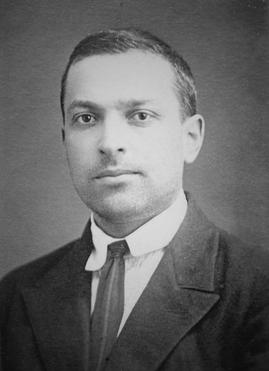
LV
Lev Vygotsky
1896–1934
Zone of Proximal Development. The basis for scaffolding: pitch instruction just beyond what students can do alone.
click
Lev Vygotsky
Zone of Proximal Development
flip back
WM
Wiggins & McTighe
None
Backward Design (Understanding by Design). Plan from the assessment back to the activities, not forward.
click
Wiggins & McTighe
Backward Design
flip back
NW
Norman Webb
None
Depth of Knowledge. Four levels of cognitive complexity that complement Bloom's taxonomy.
click
Norman Webb
Depth of Knowledge
flip back
CT
Carol Ann Tomlinson
1951–
Differentiated Instruction. Vary content, process, product, and environment to reach different learners.
click
Carol Ann Tomlinson
Differentiated Instruction
flip back
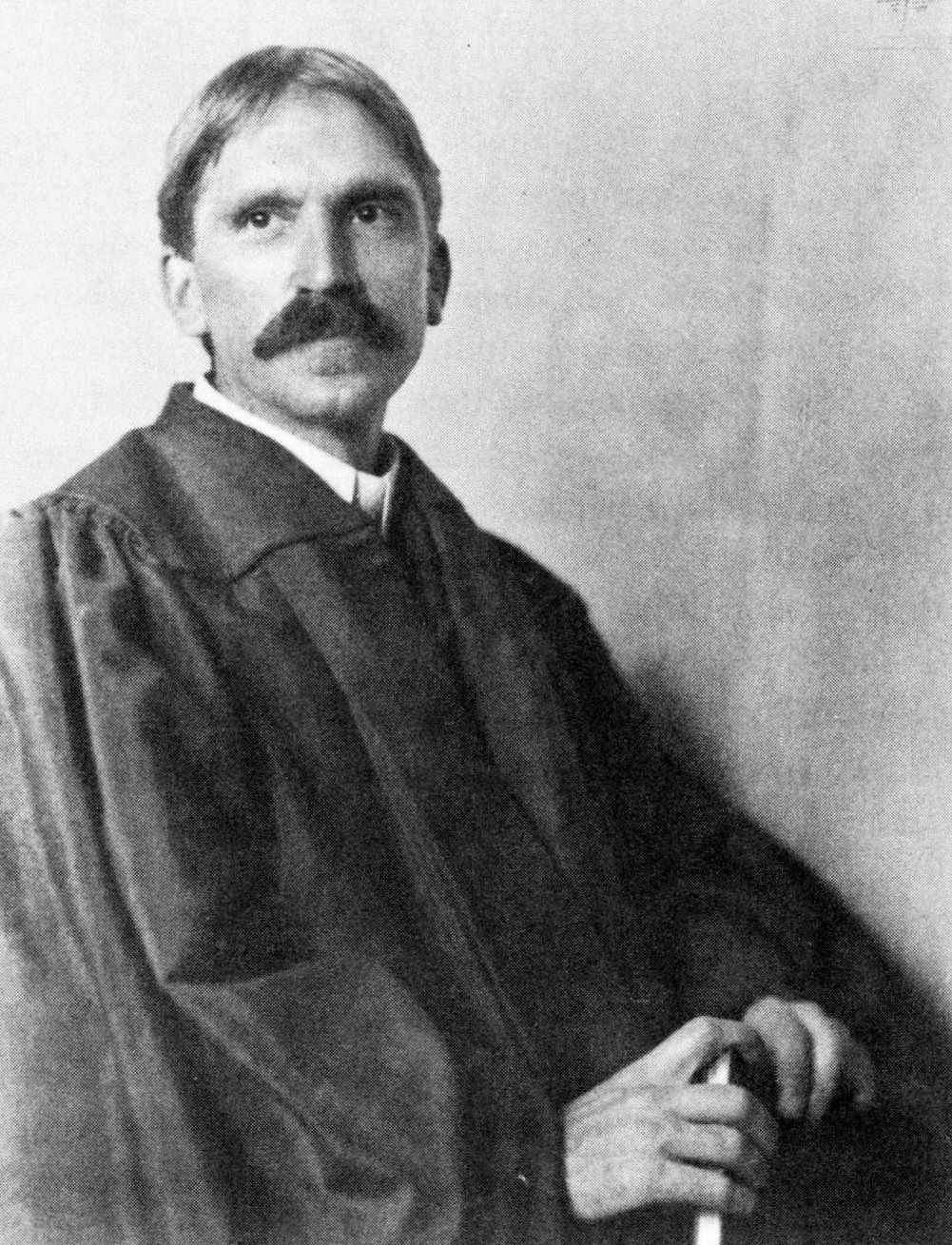
JD
John Dewey
1859–1952
Experiential learning. Learning happens through doing, reflecting, and connecting to community.
click
John Dewey
Experiential Learning
flip back
Part 5
Assignments
📝
Assignment: Standards and Objectives
The module's major assignment takes an NC standard for your subject and grade level through the full planning process: from the standard itself, through Bloom's taxonomy, to a complete performance objective.
The assignment has five parts:
Part 1: Standards Summary (20 pts). Select one NC Standard Course of Study standard for your subject and grade level. Write a brief summary that identifies the standard, explains what it asks students to know and do, and describes why it matters for your content area. This is your analysis of what the standard requires, not a copy-paste.
Part 2: Standard Dissection (20 pts). Break the standard into its component parts. Identify the content knowledge it requires (the nouns) and the cognitive processes it demands (the verbs). Map those verbs to Bloom's revised taxonomy. This step shows you whether the standard asks students to remember, understand, apply, analyze, evaluate, or create.
Part 3: Student Activity Design (20 pts). Design one classroom activity that addresses the standard. Describe the activity in enough detail that another teacher could run it. Include materials needed, time estimate, and the specific part of the standard it addresses.
Part 4: Bloom's Level Justification (20 pts). Identify the Bloom's level of your activity and justify that classification. Use the verb list from the taxonomy. Explain why the activity operates at that level and not at a higher or lower one. If your activity spans multiple levels, explain which level is primary and why.
Part 5: Complete Learning Objective (20 pts). Write one performance objective for your activity using all three components from Orlich's model (Figure 4.3): performance statement (an observable action using a Bloom's verb), conditions (the circumstances under which the student performs), and criterion measure (how well the student must perform). Your objective must align with the standard you selected, the activity you designed, and the Bloom's level you identified.
Standard is identified by number and title. Summary explains what students must know and do. Includes why the standard matters for this content area. Written in the student's own words.
Standard is identified. Summary covers what students must know and do but lacks specificity or does not explain why the standard matters. 14
Standard is copy-pasted without analysis, or summary is vague and does not address the content. 8
Part 2: Standard Dissection
20
Nouns (content) and verbs (processes) are identified. Verbs are mapped to the correct Bloom's level with justification. The mapping shows understanding of the taxonomy.
Nouns and verbs are identified. Bloom's mapping is present but may have minor errors or lacks justification. 14
Dissection is incomplete or Bloom's mapping is missing or incorrect. 8
Part 3: Activity Design
20
Activity is described in enough detail for another teacher to run it. Materials, time estimate, and connection to the standard are included. The activity addresses the cognitive level identified in Part 2.
Activity is described but lacks detail in one area (materials, timing, or standard connection). Another teacher could run it with clarification. 14
Activity is vague or does not connect to the standard. Another teacher could not replicate it from the description. 8
Part 4: Bloom's Justification
20
Bloom's level is identified and justified using specific verbs from the taxonomy. Explains why the activity operates at this level and not a higher or lower one. Shows understanding of the hierarchy.
Bloom's level is identified. Justification is present but does not fully explain why other levels were ruled out. 14
Bloom's level is missing, incorrect, or unjustified. 8
Part 5: Learning Objective
20
Objective contains all three components (performance, conditions, criterion). Uses an observable Bloom's verb. Aligns with the standard, the activity, and the Bloom's level from Parts 1 through 4.
Objective has two of three components, or uses a Bloom's verb that does not match the identified level. Partial alignment. 14
Objective is missing components or uses a non-observable verb ("understand," "appreciate"). Alignment is absent. 8
100
Total Points Standards and Objectives Assignment
🎨
Create an anchor chart in Canva that visually represents a key concept from this module. The concept can come from any of the three chapters: Bloom's taxonomy, the alignment model, the components of an objective, the six discussion types, the five features of cooperative learning, the inquiry processes, or any other concept you find useful.
Part 1: The Chart (25 pts). The visual product itself. It should be clear, readable, accurate, and designed for classroom use. Imagine this chart hanging on the wall of your future classroom where students can reference it during instruction.
Part 2: Narrative (20 pts). Two paragraphs. The first paragraph explains what concept you chose and why you chose it. The second paragraph describes how you would use this chart in your classroom: when would students see it, how would you introduce it, and what would it help them do?
Professional Quality (5 pts). Clean design, readable fonts, no spelling or grammar errors, appropriate use of color and visual hierarchy.
VoiceThread Discussion #2
Record a video or audio response to the prompt below, then reply to at least two peers with substantive comments that extend, question, or connect to their ideas.
Concept is presented clearly and accurately. Visual hierarchy makes the chart easy to scan. A student could use this chart independently during instruction. Design choices serve the content.
Concept is present and mostly accurate. Chart is readable but layout or hierarchy could be stronger. Functional but not classroom-ready. 18
Concept is unclear, inaccurate, or the design makes the chart hard to read. Would not help a student during instruction. 10
Narrative
20
Paragraph 1 explains the concept and the rationale for choosing it. Paragraph 2 describes a specific, plausible classroom use: when students would see it, how the teacher would introduce it, and what it would help students do.
Both paragraphs are present. One is underdeveloped or generic. 14
Only one paragraph, or both are vague and do not demonstrate understanding of the concept. 8
Professional Quality
5
No spelling or grammar errors. Fonts are readable. Color choices support readability. Looks like something a professional teacher would display.
Minor errors or one design choice that reduces readability. 3
Errors in spelling or grammar. Design choices hinder readability (tiny fonts, clashing colors, cluttered layout). 2
50
Total Points Canva Anchor Chart
💬
Prompt: Choose one concept from this module (Bloom's taxonomy, performance objectives, alignment, a discussion type, a cooperative learning feature, or an inquiry strategy). Describe a specific classroom situation where you have seen this concept used well or used poorly. What happened? What would you do differently, and why? Ground your response in at least one idea from the readings.
Initial post (30 pts). Clear, specific, and grounded in the module content. References at least one concept from the readings.
Two peer replies (10 pts each). Each reply engages with the peer's idea and adds to the conversation.
Self-Check
Before You Move On The Standards and Objectives assignment requires you to connect five different skills: identifying a standard, dissecting it using Bloom's, designing an activity, justifying your Bloom's classification, and writing a complete objective. Each part builds on the one before it. If you skip a step or do them out of order, the final objective will not align with the rest of your work.
Exit Ticket
Part 6
Exit Ticket
💡 Module TWO Reflection
After you have completed all the readings, activities, and assignments for this module, respond to the prompt below. Submit your response in the Exit Ticket: Module 2 assignment in Canvas (25 points).
Think about a lesson you have observed, taught, or experienced as a student. Using what you learned in this module, identify one thing about that lesson that was aligned (objectives, instruction, and assessment pointed in the same direction) and one thing that was misaligned. What would you change, and which concept from Chapters 4, 9, or 10 would guide your revision?
If you can answer with specifics, you are ready to move on. If the answer feels vague, go back to the tab that covers the concept you are unsure about and work through the activity again.
Every time you write a lesson plan, you make a decision about how hard you want students to think. That decision has consequences. If you aim too low, students coast through material they already know. If you aim too high without building the foundation, they flounder. Bloom's taxonomy ► Walkthrough gives you a shared language for making this decision, with six cognitive levels that run from simple recall at the bottom of the pyramid to original creation at the top.
The taxonomy was first published in 1956 by Benjamin Bloom and a committee of educational psychologists. In 2001, Lorin Anderson (one of Bloom's former students) and David Krathwohl revised it in two important ways: they converted the category names from nouns to verbs, because thinking is something you do rather than something you have, and they moved Synthesis to the top of the pyramid, renaming it Create. The revised version is what we use in this course, and it is what your textbook covers in Chapter 4.
According to your textbook, the taxonomy helps teachers in five specific ways: planning appropriate instruction, designing valid assessments, aligning instruction with objectives, sequencing learning from simple to complex, and communicating expectations to students. The levels are cumulative, which means each one builds on the ones below it. You cannot analyze something you have not first understood, and you cannot evaluate an argument you have not analyzed. The pyramid is a sequence, and that sequence matters when you sit down to write objectives.
The revised version also added a second dimension called the Knowledge Dimension, which crosses all six cognitive levels and includes four types of knowledge: factual (terminology, specific details), conceptual (categories, principles, theories), procedural (techniques, methods, criteria for using skills), and metacognitive (awareness of one's own cognition). When you combine the two dimensions, you get a table that can classify any learning objective with precision. A task that asks students to "recall the steps of the scientific method" is Remember + Procedural. A task that asks students to "evaluate their own problem-solving strategy" is Evaluate + Metacognitive. Your textbook presents this as the Taxonomy Table.
2 Explore the Pyramid
Click any level of the pyramid to see its definition, key verbs, and examples. Each level builds on the one below it.
Click a level of the pyramid to explore it
3 The Problem with "Understand"
One sentence shows up in lesson plans more than any other: "The student will understand photosynthesis." It sounds reasonable. It might even be what you want students to do. The issue is you cannot see understanding. It is an internal process, invisible to the teacher, and therefore impossible to measure. What you can see is a student explaining the stages of photosynthesis, or comparing photosynthesis to cellular respiration, or designing an experiment to test the effect of light color on photosynthesis rate. Those are observable actions, and each one tells you something specific about what the student knows.
This is why the taxonomy matters so much for objective writing. It gives you verbs you can observe and measure. "Explain" is at the Understand level. "Compare" is Analyze. "Design" is Create. Each verb pins down what the student will do and what you will see them doing when they do it. "Understand" gives you none of that. When you write an objective for your assignment, the verb you choose sets the whole objective.
As you work through the sort activity below, focus on the verbs. If the verb asks students to list, define, or recall, you are at Remember. If it asks students to judge, defend, or justify, you are at Evaluate. For each task, find the verb. The verb tells you the Bloom's level.
Quick Check A teacher asks students to "compare the causes of World War I and World War II." Which Bloom's level is this? Analyze. Comparing requires breaking down information and identifying relationships between parts. "Compare" is an analyzing verb. If the question only asked students to list causes, it would be Remember.
4 Sort the Classroom Tasks
Drag each task into the Bloom's level where it belongs. Use the verb in each task as your guide.
Task Bank
Drop Zone
The Knowledge Dimension (Ch. 4)
The revised taxonomy added a second axis: the Knowledge Dimension. It crosses all six cognitive levels and includes four types. Factual knowledge is the basic elements students must know (terminology, specific details). Conceptual knowledge involves the interrelationships among elements within a larger structure (classifications, categories, principles, generalizations, theories, models). Procedural knowledge is "how to do it" knowledge (subject-specific skills, techniques, methods, and criteria for determining when to use appropriate procedures). Metacognitive knowledge is knowledge about cognition in general as well as awareness and knowledge of one's own cognition (strategic knowledge, knowledge about cognitive tasks, self-knowledge). When you combine this dimension with the six cognitive levels, you can classify any learning task with precision. A task that asks students to "recall the steps of the scientific method" is Remember + Procedural. A task that asks students to "evaluate their own problem-solving strategy" is Evaluate + Metacognitive.
Webb's four levels measure complexity, not difficulty. A hard recall question is still DoK 1.
Beyond Bloom
Three Taxonomies, Side by Side
Bloom is the default in K-12 planning, but two newer frameworks show up in standards documents and professional development. Knowing the differences helps you read what is asked of you and explain your choices.
Bloom (Revised)
Anderson & Krathwohl, 2001
Remember
Understand
Apply
Analyze
Evaluate
Create
Six cognitive levels plus a Knowledge Dimension. Best for writing objectives and classifying tasks.
Webb's DoK
Webb, 1997
Recall
Skill / Concept
Strategic Thinking
Extended Thinking
Four levels of complexity, not difficulty. The default for analyzing assessment items and standards alignment in most state frameworks.
Marzano's New Taxonomy
Marzano & Kendall, 2007
Retrieval
Comprehension
Analysis
Knowledge Utilization
Metacognitive System
Self-System
Adds metacognition and motivation as separate levels above thinking. Useful when you want to plan for engagement, not just cognition.
When to use which
Use Bloom for objective writing and quick classification. Use Webb when working with state assessment items or analyzing the rigor of a task you are designing. Use Marzano when you need to plan for the affective side of learning, not just the cognitive.
Why This Matters for Your Assignment
In Part 4 of the Standards and Objectives assignment, you will identify the Bloom's level of a classroom activity and justify that classification. The justification is where most students struggle. It is not enough to say "the activity is at the Apply level." You need to explain what verb the activity uses, why that verb belongs at Apply rather than Understand or Analyze, and what the student is doing that makes it observable. The pyramid above and the sort activity give you practice doing that classification before you write it up for your assignment.
1 What Objectives Are and Why They Matter
An objective describes what the student will be able to do after instruction. That sounds simple, but the emphasis on "do" is where most new teachers trip up. "I will lecture about the Civil War" describes what the teacher plans to do, not what students will learn from it. "The student will sequence five major events of the Civil War on a timeline with 100% accuracy" is an objective, because it names an observable action (sequence), sets conditions (a timeline), and defines a criterion (100% accuracy). That shift, from what the teacher does to what the student does, is the point.
Your textbook makes the case that objectives do three jobs at once. They guide your instruction by telling you what to teach and how deep to go. They shape your assessment by defining what you will measure. And they communicate expectations to students by making the target visible before the lesson begins. When all three of these elements align, you get what the textbook calls curriculum alignment: objectives, instruction, and assessment all pointing in the same direction. When all three align, students trust the system is fair. You teach one thing, you test another, and students learn that preparation does not pay off. Alignment comes up again on the Standards tab.
2 Three Components of a Performance Objective
Your textbook (Orlich et al., Figure 4.3) identifies three required parts. Every performance objective must include all three. If one is missing, the objective is incomplete.
1. Performance StatementAn observable action using a Bloom's verb. What the student will do. What the student will demonstrate in a way you can see and measure. "Understand" does not qualify. "Identify," "compare," "design" do.
2. ConditionsThe circumstances under which the student performs: tools available, time limits, references permitted, restrictions in place. "Given a topographic map" is a condition. "Using only a calculator" is a condition. "Without notes" is a condition.
3. Criterion MeasureHow well the student must perform: percentage, count, rubric level, or qualitative standard. "With 80% accuracy" is a criterion. "At least five examples" is a criterion. "Scoring proficient or above on the rubric" is a criterion.
"Given a topographic map [condition], the student will identify [performance] at least five major landforms [criterion]."
Adapted from Orlich et al., Ch. 4, Figure 4.3
Notice how the three components work together. The condition sets up the task. The performance statement names the observable action. The criterion measure tells both teacher and student how good is good enough. Remove any one of these and the objective loses precision. Without a condition, you do not know under what circumstances the student must perform. Without a criterion, you cannot determine whether the student succeeded.
A note on the ABCD model: You may encounter a four-component model in other courses: Audience, Behavior, Condition, Degree (ABCD). The textbook for this course uses Orlich's three-component model. The difference is that Orlich's model folds "audience" (the student) into the performance statement rather than listing it separately. Both models produce the same result. For this course, use the three-component model from your textbook.
Worked Example
A Complete Performance Objective, Annotated
Here is a finished objective with the reasoning behind each piece. Hover or tap any colored part to see why it is there. Use this as the model for your own objectives.
The Objective
Given a blank diagram of the water cycle , the student will label and describe all six stages with at least 90 percent accuracy.
1
Condition
Names the constraint. Students do not get to use their notes. This also tells me what to prepare: a printed blank diagram for every student.
2
Audience (made explicit)
"The student" could be implicit, but stating it forces me to think about who this serves. Mager calls this the A in ABCD. The textbook treats it as part of the performance.
3
Performance (observable verbs)
"Label and describe" are both observable. I can see them happen. I avoided "understand" because I cannot measure understanding directly. Bloom level: Apply.
4
Criterion (quantity)
"All six stages" names the scope. Without it, "label" is vague: one stage? Two? This makes the goal countable.
5
Criterion (quality)
"At least 90 percent accuracy" is the standard for success. Specific. Defensible. A student labeling 5 of 6 correctly knows whether they hit it. "Correctly" alone is not a criterion; it is an adjective.
3 Build an Objective
Drag the chips into the workspace in correct order: Condition first, then Performance, then Criterion. The gray chips are distractors. They look like objective components but they are too vague to be measurable.
Fix the Broken Objective "The student will understand the water cycle." What is wrong with this objective? Which components are missing or broken? All three components have problems. 1. Performance: "Understand" is not observable. Replace it with "diagram," "explain," or "compare." 2. Conditions: Missing entirely. Under what circumstances? With what materials? 3. Criterion: Missing entirely. How well must the student perform? How many stages? What level of accuracy? Corrected: "Given a blank diagram of the water cycle [condition] , the student will label and describe [performance] all six stages with 100% accuracy [criterion]."
Frameworks
Two Other Ways to Write Objectives
The textbook's three-component model (performance, conditions, criterion) is one approach. Two others appear regularly in K-12 planning documents and professional development. Each carves up the same territory differently.
Framework 1
ABCD: Audience, Behavior, Condition, Degree
Mager's classic four-part model. Names the learner explicitly, then describes what they will do, the situation, and the standard for success.
AudienceWho the learner is. Usually "the student" or a specific subgroup.
BehaviorThe observable action. Same as the textbook's "performance."
ConditionThe situation, materials, or constraints in place when the student performs.
DegreeHow well or how often. Same as the textbook's "criterion."
Originally a goal-setting framework from the management world, now common in K-12 IEP goals, professional growth plans, and standards-based grading. Useful as a checklist after you write an objective.
SpecificNames a concrete behavior, not a vague aspiration.
MeasurableYou can collect evidence that tells you whether it happened.
AchievableWithin reach for these students at this point in the year.
RelevantConnected to the standard, the unit, and what comes next.
Time-boundTied to a specific lesson, week, or grading period.
Why This Matters for Your Assignment
Part 5 of the Standards and Objectives assignment asks you to write one complete performance objective using all three components. The most common mistakes students make: using a non-observable verb (like "understand" or "learn"), forgetting to include the condition, or writing a criterion that is too vague ("correctly" is not a criterion; "with at least 80% accuracy on a 10-item assessment" is). Before you write your objective for the assignment, practice here. If you can build the correct objective in the drag-and-drop activity and fix the broken one in the self-check, you are ready for Part 5.
1 What Standards Are
Standards define what students should know and be able to do at each grade level. They tell you what to teach, but they do not tell you how to teach it. That gap between the what and the how is where your professional judgment lives, and it is the source of both the power and the frustration that teachers feel about standards-based instruction.
In North Carolina, the NC Standard Course of Study lays out content standards for each subject and grade level. Every public and charter school follows the same standards, but teachers choose the methods. Two fifth-grade classrooms in the same building might teach the same standard through completely different activities, and both teachers would be doing their job well, as long as students meet the standard by the end of the unit. For your Standards and Objectives assignment, you will select one NC standard for your subject area and work through the process of unpacking it, which is what the rest of this tab is about.
Standards also have critics, and you should know the major arguments. The Fordham Foundation graded state standards across the country and found an average grade of C-minus. Some researchers argue that certain standards are developmentally inappropriate for the grade levels where they appear. Others argue that standards narrow the curriculum by pushing teachers to focus only on tested content at the expense of everything else. Your job as a teacher candidate is to understand these debates, form your own view, and plan instruction that addresses the standards for your subject area while still using the best methods available to you. The standards tell you where to go. The methods are yours to choose.
2 The Alignment Model
Your textbook calls this the "Teaching Alignment Model" (Figure 4.2). The idea is simple: objectives, instruction, and assessment must all point in the same direction. Drag the three elements into the correct sequence below.
When alignment breaks, students notice. When you teach one thing and test another, students stop trusting the system. When your objectives target analysis but your instruction only covers recall, students miss the practice they need to perform at the expected level. Alignment is what makes students trust your class is fair.
YOUR ORDER:
3 Teaching to Standards: Seven Steps
Your textbook (pp. 101-102) outlines a process for working from a standard to a lesson. Click each step to expand it. Notice how each step builds on the one before it. This is the process you will follow in the Standards and Objectives assignment.
Effect Size: A Tool for Evaluating Strategies (Ch. 4)
Your textbook introduces a tool for reading educational research: effect size. The formula is straightforward: effect size equals the experimental group mean minus the control group mean, divided by the standard deviation of the control group. An effect size of 0.25 translates to roughly 10 percentile points of improvement. An effect size of 0.50 means about 19 percentile points. An effect size of 1.0 means about 34 percentile points.
John Hattie, in his meta-analysis of over 800 studies, uses 0.40 as the threshold for a strategy worth pursuing. Anything below 0.40 is below what you would expect from ordinary instruction. Anything above 0.40 means the strategy is doing something beyond what would happen anyway. When someone tells you a teaching method "works," you now have a question to ask: what is the effect size? If they cannot tell you, be skeptical. If the effect size is below 0.40, the method may not be worth the instructional time it costs.
Quick Check A teacher writes objectives aligned to standards, then gives a test from the publisher's test bank without checking whether the questions match those objectives. What broke? Assessment alignment. The objectives and instruction may be aligned, but the assessment measures something different. Students studied the right material and got tested on the wrong questions. The solution: always check that the assessment items match the specific objectives you taught, not just the general topic.
Why This Matters for Your Assignment
Parts 1 and 2 of the Standards and Objectives assignment ask you to select a standard and dissect it. The dissection requires you to identify the nouns (content) and verbs (cognitive processes) in the standard, then map those verbs to Bloom's taxonomy. This is the alignment work in action. You are starting with the standard and working forward through the planning process: standard to Bloom's level, Bloom's level to activity, activity to objective. If you can do the alignment activity above and answer the quick check correctly, you understand the concept well enough to apply it in your assignment.
It is teachers who have created positive teacher-student relationships that are more likely to have the above-average effects on student achievement.
John Hattie, Visible Learning (2009)
Research
Instructional Strategies
Hattie's Visible Learning meta-analyses rank 252 influences on student achievement. The threshold for effort worth your time is 0.40. Here is how the strategies in this module compare.
Instructional Strategies
Hattie effect sizes
Spaced practice
0.60
Direct instruction
0.59
Mastery learning
0.58
Worked examples
0.57
Cooperative learning
0.42
Inquiry-based teaching
0.40
The red linemarks the 0.40 effect-size threshold. Source: Hattie, Visible Learning (2009 and updates). Values approximate; rounded for readability.
1 The Discussion Method
Chapter 9 opens with a scene: Alexander Daniels observes a middle school class where desks are arranged in circles, eight students per group, and the buzz of conversation fills the room. The topic is cell phones. Students talk, debate, and build summary statements on newsprint. The teacher walks the room, sitting briefly with each group, then steps back. After the discussion, groups report to the class. Alexander is impressed by the level of responsibility and control the students show.
Discussion is a teaching technique that involves an exchange of ideas, with active learning and participation by all concerned. It requires the teacher to develop a viewpoint and to tolerate and encourage a wide range of ideas. Discussion is an active process of student-teacher involvement in the classroom environment (see Brookfield & Preskill 2005). It allows a student to discover and state a personal opinion or perspective, not just repeat what the teacher or text has already presented.
Why discussion works: It promotes a variety of learning, including content, skills, attitudes, and processes. It is an appropriate way to improve the listening and speaking skills of students. It can also be a means of enhancing students' analytical skills (Dallimore, Hertenstein & Platt 2008).
2 Teaching Good Listening Skills
Before you can run a discussion, your students need to know how to listen. These are learned behaviors, not instincts.
Model It: Begin by modeling excellent listening habits for your students. Observe yourself. Do you lean forward, make eye contact, and show interest in students? Do you look away, show boredom, or avoid eye contact? The former behaviors are indicators of listening.
Give Short Directions: Children in the early grades can usually remember one or two directions. From older students, you can expect more, but do not keep repeating and explaining directions.
Help Students Listen First: Check to see that background noises, such as idling and equipment noises, are kept to a minimum (see Osta, Prewitt & Prestido 2005).
Connect to Reasons: When students know that there are concrete reasons for listening, they will improve. If you give them practice through listening exercises, and let them see how it applies to real life activities, they respond.
Use Oral Tests Frequently: Post a bulletin board display related to listening skills. Appoint one or two students to listen for any grammatical errors spoken in a class.
List Good Habits: At the end of each class, each student could list one good listening habit they practiced. Use a class recorder to provide a summary of recitation or discussion activities.
Quick Check A student says, "I already heard you say that." The teacher responds, "Good. What did I say?" The student cannot repeat it. What listening skill is missing? Active listening for content. The student heard sound but did not process meaning. Hearing and listening are different acts. Listening requires the brain to organize and retain what the ears receive. The student needs practice paraphrasing: "In your own words, tell me what I just said."
3 Key Elements of Small-Group Discussions
Four elements shape how you organize groups in your classroom.
Goals and Objectives
Small groups can learn from activities as diverse as making time lines, observing courses in session, or taking field trips to museums. The value is in the experience. The most important learning outcome is the process itself rather than its end result. For such outcomes, teachers write process objectives, which require the learner to participate in some technique, interaction, or strategy.
Ideal Group Size
Two to five is the ideal size (Cohen, Lotan & Holthuis 1997; Schmuck & Schmuck 2001). Others assert that six is the maximum (Johnson, Johnson & Holubec 1994). The authors suggest three to eight. When four or fewer individuals are involved, participants might pair off rather than interact with all members.
Room Arrangement
Turn student desks so that participants face one another and are not distracted by activities in the rest of the room. By converting the room into "centers," you can conduct several types of activities at the same time, all leading to meaningful goals.
Choice of Topics
Discussion topics may arise from ongoing classwork, or they may follow students' interest in a selected area. The topic must have relevance to those discussing it. Sufficient information should be available to class members, either in print or via the Internet, to keep the discussion going (see Burnett et al. 2010). Controversial issues and moral dilemmas are excellent topics.
Process over product: Small-group learning is especially suited to experiential activities in which the learning outcome is the process itself rather than the end result.
4 Four Basic Concepts of Small-Group Methods
Your textbook identifies four concepts you need to understand before initiating small-group discussions: process, roles, leadership, and cohesion.
The manner of process in small-group discussion is verbal interaction. Communication processes are more vital for successful discussions. Students must be taught and encouraged to listen to what each person is saying and to respond appropriately. Involvement for everyone is part of the process.
Every member of a discussion group has a role. Group members may be assigned roles by the teacher or by the group as it matures. Each role has specific privileges, obligations, responsibilities, and powers. As the teacher, the term facilitator best describes your role. A facilitator gives students the skills, materials, and opportunities they need to direct their own learning experiences. As facilitator, you need to be walking around the class, listening, observing, and encouraging every student to participate. All class members must be rotated through the roles so that everyone gets experience as the leader and in the other roles.
The single most important role in a small group is that of the leader. Leadership is a learned quality. So as teacher, you have to model how a leader opens the discussion, calls on participants, clarifies statements, and seeks everyone's comments. Leaders have to be taught how to plan the discussion, organize the group for maximum efficiency, direct the discussion, and coordinate different individual assignments. Attributes that enhance leadership ability may include personal popularity, academic standing, temperament or sociability, thinking ability, and speaking ability.
The final concept is group cohesion: the tendency of a group to stick together and support its members. A cohesive group displays a "we" attitude. The members support one another and show pride in belonging. The tone the teacher sets is all-important here. In fact, possibly the most important predictor of your ability to facilitate small-group discussion is your own set of attitudes and feelings. Appreciating small-group discussion methods requires an appreciation of the atmosphere or emotional setting of the classroom.
5 Functions of the Discussion Leader
Five functions keep a discussion moving. Click each to learn more.
Initiating: Getting the group going and keeping it moving when it becomes bogged down or goes off on a dead-end tangent (for example, by clarifying certain statements or asking questions that call for more than a yes or no answer).
Informing: Bringing new information to the group (but not by lecturing).
Supporting: Making it easier for members to contribute by harmonizing opposing viewpoints, voicing group feelings, varying members' places in the group, and helping group members get acquainted.
Regulating: Influencing the pace of the discussion by summarizing or pointing out time limits.
Evaluating: Helping the group evaluate process goals by testing for consensus or noting the group's progress in some area.
Quick Check A student leader says, "We have ten minutes left, so let's see if we can reach a conclusion." Which two leader functions is this student performing? Regulating and Evaluating. Pointing out time limits is regulating. Pushing the group toward a conclusion (testing for consensus) is evaluating. Good leaders often combine functions in a single statement.
6 Six Discussion Types
Your textbook presents six basic types of small-group discussion. Each type serves a different instructional purpose. Click each to explore.
Brainstorming is a simple and effective skill-building technique to see when a high level of creativity is desired. The entire class can participate in a brainstorming activity, but the shorter the time available for the discussion, the smaller the number of participants should be (which should, in any case, be between 4 and 15 persons). All ideas, except for obvious plays, should be acknowledged and recorded. No criticism is to be made of any suggestion. Members should build on one another's ideas. In the final analysis, no idea belongs to any individual, so encourage "piggybacking." The leader should solicit ideas or opinions from silent members and give them positive reinforcement. Quality is less important than quantity, but this does not relieve group members of the need to think creatively.
The tutorial discussion group is most frequently used to help students who have difficulty learning or processing information at a satisfactory rate. The group is very small (usually four or fewer) and focuses on a narrow range of materials. Teachers of subjects such as reading, mathematics, home and family living, art, and business often use the tutorial group for remedial instruction. It is an excellent way to facilitate student handling of manipulatives, allowing the teacher to evaluate students' motor skills and helping students understand the relationship between themselves and body functions (see Downs 2006). The tutorial leader performs three major functions: questioning students to pinpoint the exact problem that has blocked learning, providing feedback or skills to facilitate learning, and encouraging students to ask questions and to seek answers among themselves.
One of the least complex types of small groups used for discussion is the task group. Each student in a task group can make significant contributions to the discussion. A prerequisite to using task groups is delineating specific tasks for all group members. A task group has clearly defined goals and clearly identified individual assignments and roles: for example, recorder, library researcher, artist, leader, and evaluator. The jigsaw technique is a method in which each member of the small group is given a specific piece of textual information. Each group member must then contribute to the group so that all can learn the entire textual content. Thus, each member must help the others to learn.
Role playing is a process-oriented group technique in which students act out or simulate a real-life situation. It may involve almost any number of participants, although 7 to 10 is ideal. Thorough preparation will help students enjoy the process and experience of role playing. A key point to emphasize with your class is that they should not be overly concerned about interactions that might, in other situations, be perceived as personal attacks. In role playing, the emphasis is not on the psyche of any participant, but on re-enacting or dramatizing a situation and demonstrating how different characters would react in that situation.
Steps of Role Playing: (1) Briefing students: exploring the topic and establishing the situation. (2) Conducting the drama: behaving as an actor in the described situation. (3) Debriefing: analyzing how the roles were played and identifying what concepts were learned.
A simulation is a representation or re-creation of a real object, problem, event, or situation. Although it mirrors reality, a simulation removes the possibility of injury or risk to the participants. The learner is nevertheless an active participant, engaged in demonstrating a behavior or previously acquired skills or knowledge. Simulations can be used to motivate students, provide information, enhance conceptual development, change attitudes, assess performance, and provide interdisciplinary activities. Goals of simulation include: developing changes in student attitudes, changing specific behaviors, preparing participants for assuming new roles in the future, helping individuals understand their current roles, increasing students' ability to apply principles, reducing complex problems to manageable elements, illustrating roles that may affect students' lives, motivating learners, developing analytical processes, and sensitizing individuals to other persons' life roles.
If you wish to emphasize problem solving, then you will find the inquiry discussion group very valuable. Any number of students may participate in the discussion group, but six students per team is an ideal size. The purposes of an inquiry discussion group are to stimulate scientific thinking, develop problem-solving skills, and help acquire new facts through a process of discovery and analysis (Sparapani 1998). The teacher may be the leader of this type of group. If, however, you have a student who has demonstrated good questioning skills and understands the concept under consideration, then allow that student to be the leader. Inquiry groups stimulate students to become skillful askers of questions. They also allow students to test the validity of hypotheses, determining by direct experience whether they are valid.
Inquiry groups are most appropriate for disciplines that lend themselves to problem solving, such as science and social science (George & Becker 2015; Yell 1998).
7 Match the Discussion Type
Drag each classroom scenario to the discussion type it best represents.
Scenario Bank
Discussion Types
Providing Positive Feedback (Ch. 9)
Why use positive feedback in a small-group setting? First, as you already saw in Chapter 8, positive feedback increases responses. Many students do not respond because they are afraid of giving an incorrect reply and receiving a negative teacher reaction. If they give a partially correct response, then some positive feedback from you should motivate students to try again. Second, students need to learn to cooperate with and support others. Students can and will learn to give positive feedback to one another, but only if you are not the only one giving feedback. Gradually shift the responsibility for providing feedback to the group. This helps to promote active learning and the group takes ownership of the positive group atmosphere.
8 Cooperative Learning
Cooperative learning has much in common with the methods already discussed. Its essential characteristic is that it builds positive interdependence by teaching students to work and learn together in a small-group setting. Traditional cooperative learning groups consist of three to four students who work on an assignment or project together in such a way that each group member contributes to the learning process and then learns all the basic concepts being taught.
During the first decade of the twenty-first century, more than 1000 citations related to cooperative learning were listed in the online ERIC service.
Arthur K. Ellis 2005, pp. 173-182
9 Five Features of Cooperative Learning
Traditional models of cooperative learning share five distinct features (Jacobs, Power & Loh 2002; Johnson & Johnson 2004). Drag each feature to its correct definition.
Features
Definitions
10 Benefits of Cooperative Learning
Research supports these eight benefits across grade levels and subject areas.
1. Academic Content: Improves comprehension of basic academic content across subjects.
2. Social Skills: Reinforces social skills needed for working with others.
3. Decision Making: Allows student decision making within the group structure.
4. Active Environment: Creates an active learning environment where students engage with material.
5. Self-Esteem: Boosts student self-esteem through group success and individual contribution.
6. Diverse Learning Styles: Celebrates diverse learning styles by offering multiple ways to participate.
7. Student Responsibility: Promotes student responsibility for their own learning and their group's learning.
8. Success for Everyone: Focuses on success for everyone, not just the top performers.
11 Initiating Cooperative Learning
Getting cooperative learning started takes careful planning. Here are the key steps.
Selecting Student Groups
Several details should be considered when you form cooperative learning groups. Groups may be formed on the basis of academic skill level, interests, personality, social skills, or a combination of these factors. Groups usually contain students of varying ability levels who support one another in multiple ways. Cooperative learning groups often remain together for 2 to 6 weeks; at that time, group membership changes to allow students to experience cooperation and caring with other peers.
Planning Activities
Many types of learning can take place in cooperative settings. Learning activities may allow for both individual and collaborative work, or for small-group interaction followed by whole-class discussion and analysis (see Zuckerman, Chudinova & Khavkin 1998). For example, students might read a history text and articles as individuals, then convene in small groups to review the materials and discuss the causes of the Great Depression, and then share their findings with the whole class.
Setting Academic and Social Goals
You must carefully set academic and social goals for cooperative groups and articulate these goals to students on a daily to weekly basis. Especially when first using cooperative learning, students will need specific training and monitoring. It is helpful to emphasize one or two social skills each day or week and to remind students to practice them within their group.
Monitoring Progress
It is essential to monitor and evaluate the progress of individual students and working groups as a whole. You need to assess the academic progress, social functioning, and emotional well-being of individual students, as well as the productivity and social functioning of the working groups. Group productivity may be assessed through time logs, progress reports, and final group projects.
Quick Check A parent complains: "My gifted child is doing all the work while the others coast." This is a common criticism of cooperative learning. How does the textbook address it? Multiple counterpoints. First, all students have areas of lesser and greater abilities. Academically gifted students, for instance, may lack essential social skills, feel separate from peers because of unique abilities, or fear class presentations. Cooperative learning allows students to share their diverse talents and learn new skills. Second, cooperative learning provides benefits to students beyond academics, including the teaching of social skills that are essential to working in families, schools, communities, and workplaces. Third, the type of task assigned influences whether all students will benefit. Tasks that focus on finding information do not provide much benefit to gifted students. The assignment also needs to involve understanding essential concepts, exploring new meanings, thinking critically, and synthesizing information. Individual accountability (each student must demonstrate learning separately) addresses the "free rider" concern directly.
12 Key Social Skills for Groups
Your textbook lists these social skills students need to practice within cooperative groups.
Brainstorming with others
Making sure each person has an equal opportunity to participate
Solving problems cooperatively
Knowing what to do when one group member fails to contribute
Knowing how to handle conflict with other group members
Choosing sides
Chapter 9 Wrap-Up Discussion and cooperative learning are two of the most researched instructional strategies in education. The research is clear: when done well, both improve academic achievement, social skills, and student attitudes toward school. The key phrase is "when done well." Well-structured group work is what makes the difference. Use process objectives. Teach listening skills first. Assign specific roles. Set academic and social goals. Monitor and evaluate both individual and group progress. Do those things, and the group work pays off.
1 Defining Thinking
Chapter 10 opens with Diana Shaw's social studies class. Students work in small groups of three to five. A few students sit at the computer center. The teacher is helping a small group of students with learning disabilities align their data on a large poster. Walls are covered with student work. Their project resembles the output of a professional convention.
What do we mean by thinking? The word is a construct or a label we apply to processes we can observe only indirectly through actions or products. In other words, when someone behaves in a careful, prudent manner, we infer that behavior resulted from deliberate thought. We propose that thinking is a combination of knowledge, skills or processes, and attitudes. Knowledge: the more knowledge you have about any area, the more effectively you can think about it (Schallert 2006; Shayer & Adey 2002; Steinberg & Spear-Swerling 1996). Effective thinking also requires particular attitudes, such as a disposition to perceive and relate to one's surroundings in particular ways.
Pulling together all of this information, we arrive at the following definition: thinking is a complex act comprising attitudes, knowledge, and skills. It allows the individual to shape his or her environment more effectively than would be possible by intuition alone. Teaching students how to think is a journey, not an event.
Orlich et al., Ch. 10
2 Attitudes That Promote Effective Thinking
Four attitudes distinguish effective thinkers from passive learners.
Suspend Judgment: Willingness to suspend judgment until sufficient evidence is presented. Effective thinkers do not rush to conclusions.
Tolerance for Ambiguity: Comfort with uncertainty and incomplete information. Not everything has a clean answer, and good thinkers accept that.
Question Authority: A tendency to question rather than simply accept authority. This does not mean defiance; it means intellectual independence.
Demand Evidence: Willingness to balance credible evidence against claims. If someone makes an assertion, an effective thinker asks, "How do you know?"
3 Elements of Critical Thinking
Higher-level thinking skills, also known as critical thinking, consist of the application of the top two levels of Bloom's taxonomy: analysis and synthesis, plus evaluation (determining value). Critical thinking is a multistage construction of meaning.
Identifying Issues: Recognizing the problem or question that needs examination.
Identifying Relationships: Seeing connections between elements, causes, and effects.
Deducing Implications: Drawing logical consequences from given information.
Inferring Motives: Understanding why people or characters act the way they do.
Making Original Interpretations: Combining independent elements to create new patterns of thought (creatively).
Quick Check A teacher tells students: "Columbus discovered America." A student replies: "But the people who were already living there knew it existed." Which attitude of effective thinking is this student demonstrating? Questioning authority. The student is not accepting the statement at face value but interrogating the assumptions behind it. The word "discovered" implies no one knew about the land before Columbus arrived. The student identified the flaw in that framing.
4 Core Skills of Thinking
Nearly all writers agree on the generic aspects of thinking highlighted in the Core Skills of Thinking box (Lyons & LaBoskey 2002; Wallace & Bexley 2003). These five skills are core skills. To build these skills requires careful teacher planning, appropriate sequencing, and a continuous building of cognitive and attitudinal factors.
Perception of a Problem or Issue: Recognizing that something needs attention or resolution.
Ability to Gather Relevant Information: Knowing what to look for and where to find it.
Competence in Organizing Data: Sorting, classifying, and structuring information so it can be analyzed.
Analysis of Data Patterns: Identifying similarities, sources of errors, and meaningful relationships.
Communication of Results: Presenting findings clearly so others can evaluate and build on them.
5 The 13 Inquiry Processes
The basic processes of inquiry learning are listed below in order of complexity. Each process requires progressive intellectual development: as you develop one process, it spurs development of others. Click each to learn what it involves.
Identifying objects, object properties, and changes in various systems; making controlled observations; ordering a series of observations.
Making simple and complex classifications; tabulating and coding observations into groups based on shared properties.
Drawing conclusions based on observations; constructing situations to test these conclusions against new data.
Identifying sets and their members and then progressing to higher mathematical processes to quantify observations.
Identifying and ordering lengths and then areas, volumes, weights, temperatures, and speeds using appropriate tools and units.
Identifying movement and direction; learning rules governing changes in position across time and space.
Constructing graphs and diagrams to describe simple and then more complex phenomena; presenting written and oral reports of findings.
Interpolating and extrapolating from data; formulating methods for testing predictions against outcomes.
Distinguishing between operational and nonoperational definitions; constructing operational definitions for new problems that specify observable, measurable criteria.
Distinguishing hypotheses from inferences, observations, and predictions; constructing and testing hypotheses against evidence.
Describing data and inferences based on them; constructing equations to represent data; relating data to hypotheses; making generalizations supported by experimental findings.
Identifying independent and dependent variables; conducting experiments; describing how variables are controlled to ensure valid results.
Interpreting accounts of scientific experiments; stating problems; constructing hypotheses; conducting experimental procedures from start to finish.
Quick Check A fourth-grade class measures the temperature of water at different depths in a pond, records the data in a table, and draws a graph showing the pattern. Which inquiry processes are they using? At least four processes: (1) Observing (noting temperature readings), (5) Measuring (using thermometers at specific depths), (7) Communicating (constructing the graph and table), and (8) Predicting (if they extrapolate what temperature they expect at the next depth). If they then ask "Why is it colder at the bottom?" they are moving into (3) Inferring and (10) Formulating Hypotheses.
6 Guided vs. Unguided Inductive Inquiry
Inductive inquiry can be approached in two different ways: guided and unguided. If you provide the specifics (the data or facts) and want the students to make the generalizations, then you are conducting guided inductive inquiry. If you allow students to discover the specifics themselves before they make generalizations, then the process is unguided inductive inquiry.
Guided Inductive Inquiry
The teacher controls the specifics of the lesson: the events, data, materials, or objects, and thus acts as the class leader. Each student reacts to the specifics and attempts to structure a meaningful pattern based on his or her observations and those of others in the class. The classroom is to be considered a learning laboratory. Usually, a fixed number of generalizations will be elicited from the learners. The teacher encourages each student to communicate his or her generalizations to the class so that others may benefit from them.
Unguided Inductive Inquiry
The teacher plays the key role in asking questions, prompting responses, and structuring the materials and situations. Student-initiated learning situations enable the students to take more responsibility for examining data, objects, and events. Because the teacher's role is minimized, the students' activity increases. The students, using the materials provided and without further teacher guidance, ask all the questions that come to mind. The materials are essential to making the classroom a laboratory. Meaningful patterns are generated by students through individual observations and inferences and through interactions with other students.
7 Sort: Guided or Unguided?
Drag each classroom scenario into the correct category.
Scenario Bank
Categories
8 Problem Solving (Dewey Model)
Problem-solving models of instruction are based on the ideas of John Dewey (1916, 1938). Among his major educational contributions was his advocacy of a curriculum based on problems. He defined a problem as anything that gives rise to doubt and uncertainty. Dewey held that a problem has to be appropriate to students' level of study, has to be important to the culture, and has to be important and relevant to the student.
The student or class must first recognize that a problem exists and that it needs attention.
Move from general awareness to specific identification. What exactly is the problem? State it precisely.
Define key terms so all participants are working from the same understanding. Ambiguous language creates ambiguous solutions.
What are the constraints? Time, resources, scope? Establishing limits keeps the investigation focused and manageable.
Subdivide the problem so that it may be investigated systematically, one element at a time.
Collect data that are relevant to each task element. Not all data are equal; relevance is the filter.
Before drawing conclusions, examine the data for errors, bias, or gaps. The quality of your conclusions depends on the quality of your data.
Search the data for meaningful relationships, patterns, and connections between elements.
Based on the synthesized data, make generalizations and suggest alternatives to rectify the problem.
Communicate what was found. Science progresses when results are shared, challenged, and replicated by others.
9 Discovery Learning (Strike's Four Modes)
Strike (1975) establishes two categories of discovery: absolute discovery (something discovered for all humankind, like DNA's molecular reproduction) and relative discovery (a concept that is already known by others but is found out for himself or herself for the first time by an individual learner). Strike also presents four modes of discovery.
1. Knowing That: Factual knowledge: knowing a fact, a date, a formula.
2. Knowing How: Procedural knowledge: knowing how to perform a skill or operation.
3. Discovering That: Finding out a fact or principle for the first time through investigation.
4. Discovering How: Figuring out a procedure or method through experimentation and trial.
Strike provides a basic criterion that is essential for any act to be labeled a discovery: the discoverer must communicate both the what and the how to others. If you discover the Lost Dutchman Mine in Arizona but do not tell a single individual, then you have not made a discovery.
Quick Check Students in a chemistry class figure out through trial and error that mixing baking soda and vinegar produces carbon dioxide gas. The textbook already describes this reaction. Which of Strike's four modes of discovery applies? Relative discovery, in the mode of "Discovering That." The students discovered a fact (that the reaction produces CO2) for themselves, even though the fact is already known to the scientific community. It is a personal discovery, not an absolute one. If they also figured out the process of capturing and testing the gas on their own, that would also involve "Discovering How."
10 Ten Teacher Behaviors That Encourage Thinking
These ten behaviors, drawn from the research, help students improve their thinking processes. Match each behavior to its description.
Behavior Bank
Descriptions
11 Strategic Learning and Metacognition
Critical thinking skills are also called strategic learning: students develop a capacity to accelerate their own learning. The textbook lists four assumptions about learners and learning that shape how we teach these skills.
Built on Prior Knowledge: New skills, knowledge, competencies, and interests are built on previous ones. Learning is cumulative.
Active and Enjoyable: Information is remembered when it is meaningful and gained through active and enjoyable learning experiences.
Motivation Through Competence: Motivation is reinforced when learners feel competent. Success breeds persistence.
Practice in Various Formats: Opportunities must be provided to practice critical thinking and problem solving in various formats, not just one mode.
12 Metacognitive Techniques
Metacognitive skills: being aware of your thought processes while you are thinking. Research indicates that effective problem solvers subvocalize; in other words, they talk to themselves, constantly reading the situation, rechecking their progress, and evaluating whether their thinking is moving in an appropriate direction. Five techniques help students build these skills.
Consider a high school unit in US history that focuses on the colonial period. One way to combine content and thinking skills coverage is to have students prepare a large wall chart listing specific characteristics of several colonies. These might be geographic features, economic characteristics, or social backgrounds and attitudes. From these data, students could infer and hypothesize about colonies' possible attitudes toward future events, such as declaring independence. Depending on the instructional emphasis, students could be involved in virtually all thinking processes, from lower-order skills (observing and classifying) to higher-level skills (distinguishing relevant from irrelevant statements).
Use your thought processes as examples. This will help make students aware of their own thought processes (see the fourth and fifth teacher behaviors in the Instructional Strategies box and the related discussion of metacognition). Share with students the thinking you follow in planning a lesson, making a conclusion, or performing any relevant activity. Have your students identify the particular skills you use and suggest other strategies you might follow. Such demonstrations can take the form of printed handouts, audiotapes, or even a contributed problem-solving exploration of a student's question.
Have students summarize material in their own words. Ask students to outline the steps in a math solution, list the causes of a social condition, give reactions to an assembly speaker, and so on. Writing summaries is itself both an exercise of thinking skills and a generator of those skills. We must think to write; in addition, when writing, we frequently come up with new statements and ideas we did not think of beforehand. Writing is probably useful in learning because it forces the student to develop criteria, to identify some ideas as more important than others. This activity stimulates and reinforces the higher-level thinking skills.
Have students describe what is going on in their minds while they are thinking (Ricek 2004). Have students practice this technique in pairs for 3 to 5 minutes several times every week to overcome unfamiliarity with the method (and to practice cooperative learning). Once they are accustomed to the process, students can read their thinking processes in larger groups or in front of the entire class to maintain the skill.
Teaching metacognition can also include having students monitor their own academic behavior. Do they have test-taking strategies? Are the strategies effective? Might they be improved? What about learning strategies? Do they know whether they learn better from visual, auditory, or kinesthetic stimuli? Do they have strategies to help in each area? All of these questions are relevant to students' school experience. All are areas that you can explore with students as you help them share with one another and provide useful information.
Theory Link
Inquiry as Scaffolding (Vygotsky )
The "guided" in guided inductive inquiry is not a synonym for "easy." It is a design principle traceable to Vygotsky. Inquiry asks students to work just beyond what they can do alone, in a Zone of Proximal Development the teacher constructs through prompts, examples, and patient questions. The teacher's guidance is the scaffold; remove it too soon and students fall, hold it too long and they never stand up.
The ten teacher behaviors that encourage thinking (page 300) are scaffolding behaviors. Each one creates space for students to do cognitive work the teacher could do faster. That is the point. Speed is not the goal.
Chapter 10 Wrap-Up
Inquiry teaching and higher-level thinking are how you teach the subjects you already have. Every content area can support observing, classifying, inferring, hypothesizing, and experimenting. Every classroom can make space for problem solving and discovery. The ten teacher behaviors are daily habits. Plan for thinking. Reach for meaning. Ask thought-provoking questions. Make students aware of their mental processes. Call on students to explain. Be patient. Thinking instruction should be part of each lesson, every day. Significant change requires at least a semester.
Differentiation is simply attending to the learning needs of a particular student or small group of students rather than the more typical pattern of teaching the class as though all individuals in it were basically alike.
Carol Ann Tomlinson
Reach Every Student
Differentiation: Tomlinson's Framework
Bloom, performance objectives, cooperative learning, and inquiry still leave one question open: how will you vary instruction for the range of learners in front of you? Carol Ann Tomlinson's framework names four things you can adjust.
Differentiation
Four Things You Can Adjust
Differentiation is making deliberate choices about which dimensions of the lesson will vary for which students. Pick one or two per lesson, not all four.
ContentWhat students learn, or how it is presented. Different reading levels of the same text. Different entry points to the same concept.
ProcessHow students engage with the content. Different activities, group sizes, or time allotments to reach the same objective.
ProductHow students show what they learned. Different formats (essay, presentation, model) to demonstrate the same understanding.
EnvironmentThe classroom conditions. Quiet corners for focused work, group tables for collaboration, flexible seating that matches the task.
Differentiation in this module
Look back through Chapters 4, 9, and 10. The discussion types in Chapter 9 (brainstorming, tutorial, role playing, simulation) are differentiation of process. Anchor charts and visual organizers (Module 2 assignment) are differentiation of content. Letting students choose between an essay and a video for the assessment is differentiation of product. None of these methods are inherently differentiated. They become differentiated when you decide who needs what.
Choose
Which Method Fits Your Goal?
Direct instruction, cooperative learning, and inquiry each do a different kind of cognitive work. Pick the situation closest to yours.
Which instructional method should you use? Pick the goal that best describes what you want students to come away with. Students need to learn a specific procedure or set of facts they will build on later. Students need to wrestle with a complex task together and learn from each other. Students need to investigate a question and arrive at understanding themselves.
• Apply It: Branching Scenarios
The readings give you the planning tools. Recognizing a design problem in the middle of a classroom is something else. These four scenarios drop you into classrooms where something has gone sideways, and your choices determine what happens next. Each response leads to a different outcome, and you deal with the consequences before you move on.
Teaching works like that. You make a decision, you see the result, then you make another decision based on what happened. The scenarios cover objectives (Ch. 4), curriculum alignment (Ch. 4), cooperative learning (Ch. 9), and inquiry teaching (Ch. 10). Work through all four. If a wrong turn teaches you something the right answer would not have, that is the point.
After the Scenarios
Go back through the paths you took. For each wrong turn, go back to the relevant chapter tab and find the section that covers the concept. One sentence is enough: what shifted in your understanding? The act of naming your mistake and connecting it to the source material is one of the metacognitive techniques from Chapter 10. You are practicing the thing you just read about.
Three More Objectives, Annotated
A math objective at Bloom-Apply, an English objective at Create level, and one objective with five mistakes baked in. Use the first two as additional models. Use the third as a checklist of what to avoid in your own work.
Worked Example · Math · Apply
A Bloom-Apply Objective in Math
Apply means using a learned procedure in a new situation. The challenge in math is making "apply" different from "remember." Hover each piece to see the moves.
The Objective
Given five real-world word problems involving distance, time, and speed , the student will solve for the unknown variable using the formula d = rt and showing all work , with at least four problems solved correctly.
1
Condition (real-world context)
"Word problems" not bare equations. The Apply level requires students to use the formula in a new context, not just plug numbers into an exercise that already names which formula to use.
2
Performance (Apply-level verb)
"Solve for the unknown variable" is observable. The student writes the steps, and you see them. Bloom-Apply is the level when students choose and use a formula, not just recall it.
3
Method made explicit
"Showing all work" forces the cognitive moves to be visible. A student who guesses and lands on the right answer does not pass this objective. The work is the assessment, not the answer.
4
Criterion (count + threshold)
"At least four of five" is countable and defensible. A student who solves three correctly knows they did not hit it. "Correctly" alone would not survive a grade dispute.
Worked Example · English · Create
A Create-Level Objective in English
Create is the top of Bloom's. The verb has to demand original work. The criterion has to make originality measurable without crushing it.
The Objective
After analyzing three persuasive essays from the textbook , the student will compose an original 500-word op-ed on a current local issue , applying at least three rhetorical techniques (ethos, pathos, logos) that target a specific audience identified in the opening paragraph.
1
Condition (builds on prior analysis)
"After analyzing three" makes Create dependent on Analyze. Students do not invent a genre cold; they study models, then produce. This is also a fairness move: every student starts from the same examples.
2
Performance (Create-level verb + format)
"Compose" is unambiguously Create. "Original" rules out rewriting one of the three essays. "500 words" sets a scope: long enough to develop, short enough to grade.
3
Topic constraint (authentic, bounded)
"Current local issue" ties the work to something the student cares about. Bounded enough to keep the assignment teachable but loose enough to honor student voice.
4
Criterion (countable, theory-linked)
"At least three of ethos, pathos, logos" gives you a checkable threshold. Ties the writing back to the rhetoric the unit covered. Prevents "I just wrote my opinion" submissions from passing.
5
Criterion (audience awareness)
Forces a rhetorical decision visible in the opening paragraph. You can grade for this. "Persuasive writing" without a named audience is just writing.
Spot the Mistakes
A Broken Objective
Five things are wrong with this objective. Hover each colored piece to see what is broken and how to fix it. If your draft has any of these, rewrite before submitting.
The Broken Objective
The student will appreciate the importance of Shakespeare's tragedies by completing the worksheet correctly.
1
"Appreciate" is not observable
You cannot see appreciation happen. You cannot grade it. Replace with a verb you could film: analyze, compare, defend, write. Same family of banned verbs: understand, know, learn, value, enjoy.
2
"The importance" is a vague abstraction
Importance to whom, in what way? Replace with a concrete topic: "the use of soliloquy," "the role of fate," "Shakespeare's portrayal of grief." Pin the abstraction to something countable.
3
Scope too broad
"Shakespeare's tragedies" is 10 plays plus or minus. Pick one. "Hamlet" or "Othello" can fit a unit. The whole genre cannot. A scope you cannot teach is a scope you cannot assess.
4
"The worksheet" is not a performance
What is on the worksheet? Multiple choice? Short answer? An essay? "Completing the worksheet" tells the student nothing about the cognitive work. Name the actual task: "answer five short-response questions about Hamlet's Act 3 soliloquy."
5
"Correctly" is not a criterion
It is an adverb. Where is the count? The percentage? The rubric? Replace with something measurable: "with at least 80 percent accuracy" or "scoring 4 of 5 on the analysis rubric." If a student could argue with you about whether they hit it, the criterion is too vague.
• Video Library
These instructor walkthroughs cover Chapters 4 and 10. Each video does what the textbook cannot: it lets you watch someone think through a concept in real time and shows you the reasoning behind the choices an experienced teacher makes.
One practical suggestion: as you watch, write one sentence connecting something in the video to something specific from your reading. Not a summary, a connection. You will use these connections in your VoiceThread discussion, and having them written down gives you a concrete starting point when it is time to record your response.
Chapter Walkthroughs
These instructor videos cover each chapter's key concepts. Copies of the PowerPoint slides are in the Modules section on Canvas.
▶Video coming soon.
Chapter 4: Objectives, Taxonomies, and Standards. Instructor walkthrough of the alignment model and objective writing.
▶Video coming soon.
Chapter 10: Inquiry Teaching and Higher-Level Thinking. Instructor walkthrough of inquiry methods and questioning that pushes cognition.
After Watching
Pick one chapter walkthrough above. After each video, write one sentence connecting something the instructor said to something from the reading. Not a summary. A connection: what idea from the video reinforced, clarified, or complicated something from the reading? Bring it to the VoiceThread discussion as a starting point when it is time to record your response.
Module 2
Flash Card Review
Click the card to flip. Mark each one "Got it" or "Review again" to see what to study next.
1 of 12
Chapter 4
Term
Bloom's Taxonomy
Click to reveal
Definition
...
Done
0 got it · 0 to review
Memory Match
Match each term to its definition. Click two cards to flip them. Matching pairs stay open.
Moves: 0Matches: 0 / 6
Nice work.
Solved in 0 moves and 0 seconds.
Memory Match: Bloom's Taxonomy
Match each cognitive level to its action.
Moves: 0Matches: 0 / 6
Nice work.
Solved in 0 moves and 0 seconds.
Memory Match: Six Discussion Types
Match each discussion format to its purpose.
Moves: 0Matches: 0 / 6
Nice work.
Solved in 0 moves and 0 seconds.
Bonus Resources
⭐ Bonus
Go Deeper
These are optional. They expand on concepts from the chapters and may help with your assignments.
📖
Anderson & Krathwohl: A Taxonomy for Learning, Teaching, and Assessing
An open summary of the 2001 revision: the noun-to-verb shift, the move of Synthesis to Create, and the knowledge dimension table. Vanderbilt's Center for Teaching guide is the most-cited free source.
The full standards database for North Carolina, organized by subject and grade level. You will need this for Part 1 of the Standards and Objectives assignment.
The meta-analysis behind the 0.40 effect size threshold from Chapter 4. Hattie ranked 252 influences on student achievement. The full list is searchable online.
Spencer Kagan's structures (Think-Pair-Share, Jigsaw, Round Robin) are widely used implementations of the cooperative learning features from Chapter 9.